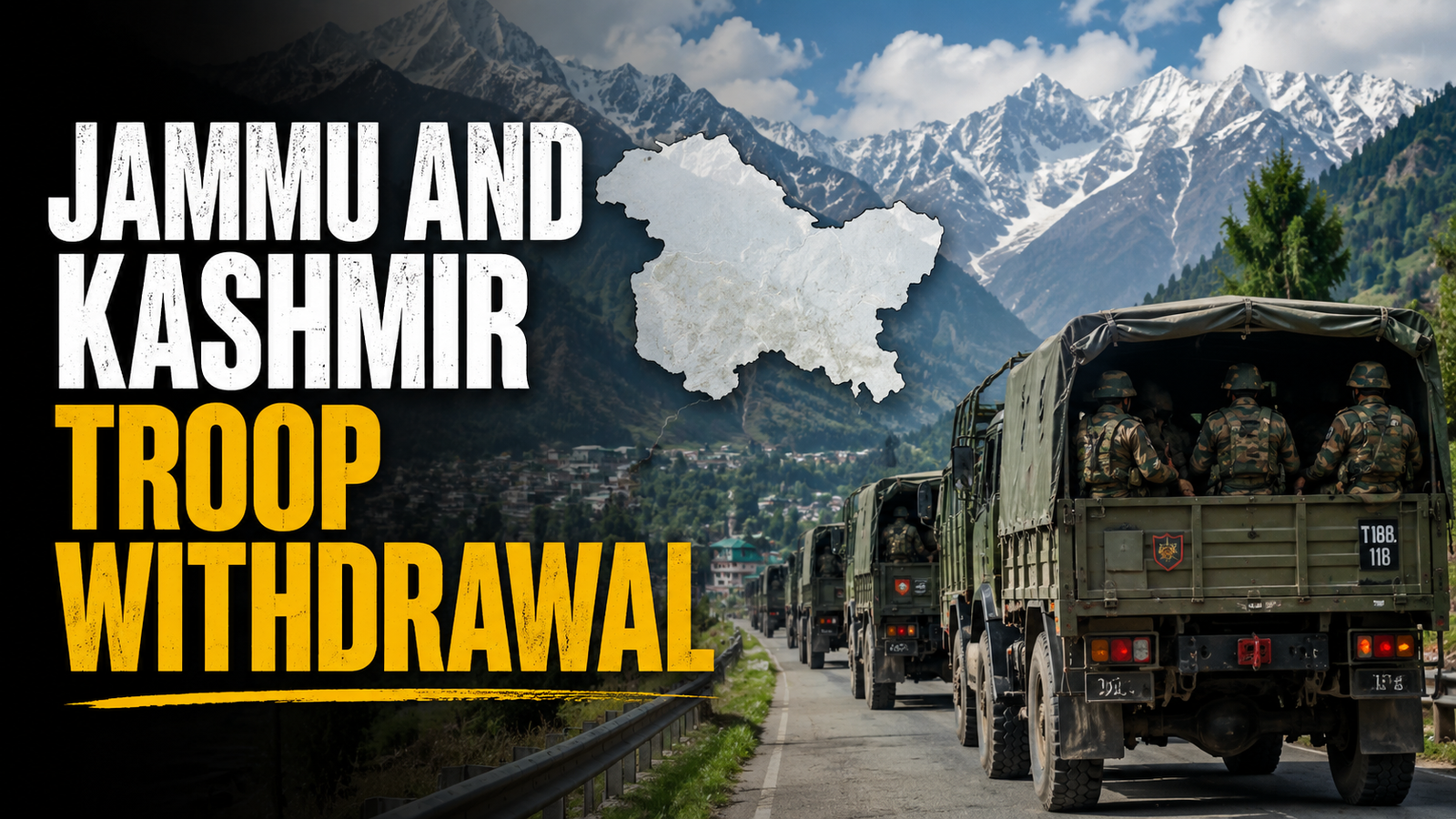
Troop Withdrawal in Jammu and Kashmir: Debate and Justification
Written by Waheeda Jammu Kashmiri
The demand for troop withdrawal from Jammu and Kashmir often triggers strong reactions, particularly among political elites in Pakistan-administered Jammu Kashmir. As observed by writer Idrees Sharrar, discomfort emerges almost immediately, followed by a set of familiar justifications aimed at rejecting the idea.
One of the most common arguments raised is this: if Pakistan’s army withdraws, India will take complete control of the region. Sharrar challenges this narrative by urging a shift from fear-based assumptions to legal and historical realities.
Examining the Core Justification
According to Sharrar, the demand for troop withdrawal is not an emotional or political slogan—it is rooted in internationally accepted agreements. The United Nations resolution of 13 August 1948 clearly called for the withdrawal of forces from Jammu and Kashmir by both India and Pakistan.
This resolution also defined a clear mechanism:
- Withdrawal of troops from both sides
- Oversight by a United Nations Commission
- Arrangement of a plebiscite to determine the will of the people
Sharrar emphasizes that both countries formally accepted this framework, making the demand for demilitarization legally grounded rather than speculative.
Why the UN Process Failed
A United Nations Commission was established and actively attempted to implement troop withdrawal and organize a plebiscite. However, as Sharrar notes, the process did not fail due to lack of structure or clarity.
Instead, he points directly to the role of both governments, arguing that political rigidity and unwillingness led to the failure of implementation. In his view, it was not the resolution that was flawed, but the lack of commitment from both sides.
Jammu Kashmir Still on the UN Agenda
Sharrar also highlights an often overlooked reality: the Kashmir issue has not disappeared from the United Nations. Observer missions are still active, with multiple offices operating in the region.
This continued presence, he argues, is clear evidence that the dispute remains unresolved at the international level. It also means that mechanisms like a UN-supervised plebiscite are still legally and diplomatically possible—if both countries choose to pursue them.
The Shift to Bilateral Politics
With the signing of the Shimla Agreement in 1972, India and Pakistan agreed to resolve the issue bilaterally. Sharrar views this as a significant departure from earlier commitments.
He argues that:
- The ceasefire line was redefined as the Line of Control
- The issue was reframed as a territorial dispute
- The role of the United Nations was deliberately minimized
In his analysis, this shift represents an attempt by both countries to move the issue away from international oversight and toward mutual control.
Is the Demand Really Unjustified?
Sharrar strongly rejects the claim that troop withdrawal is an unrealistic or unjustified demand. Instead, he argues that those who oppose it often ignore the very UN resolutions their states have signed.
He suggests that a proper understanding of UN documents and commission reports makes it clear that demilitarization was always intended as a foundational step toward resolving the conflict.
Beyond Proxy Conflict
Finally, Sharrar critiques the idea that the issue can be resolved through indirect or proxy conflicts. He points out that the people of the Jammu Kashmir are fully aware of the consequences of such strategies.
For him, the path forward lies not in continued militarization, but in revisiting international commitments and prioritizing a peaceful, people-centered resolution.
About Author

-
I am a Computer Science student originally from Mirpur, in Pakistan-administered Kashmir, and currently based in London. Alongside my academic pursuits, I am deeply committed to writing, with a particular focus on local and political issues affecting my homeland. As a contributor to KiNewsHD, I strive to amplify underrepresented perspectives and foster greater awareness through thoughtful, informed commentary.
I am a co-founder of JFJK and previously served as President of its UK zone, where I advocated for the rights and voices of the Kashmiri people, including the aspiration for an independent Jammu and Kashmir. In addition to my advocacy work, I am the founder of K2 Creative Agency, reflecting my interest in creative expression and digital engagement.
As a feminist, I am guided by a strong belief in equality and social justice. I use my platform to engage with issues that matter, drawing inspiration from Shaheed Maqbool Butt, whose legacy continues to shape my perspectives and commitment to activism.
Latest News!
 News06/24/2026The Blood of Our Martyrs Cries Out: Pakistan’s Brutal Crackdown on JAAC Protests in Azad Kashmir
 News05/29/2026AJK Identity Under Threat
 News05/22/2026Hamza Burhan Killed in Muzaffarabad: Kashmiris Trapped Between Indian Propaganda and Pakistani Hypocrisy
 Blog05/20/2026Troop Withdrawal in Jammu and Kashmir: Debate and Justification