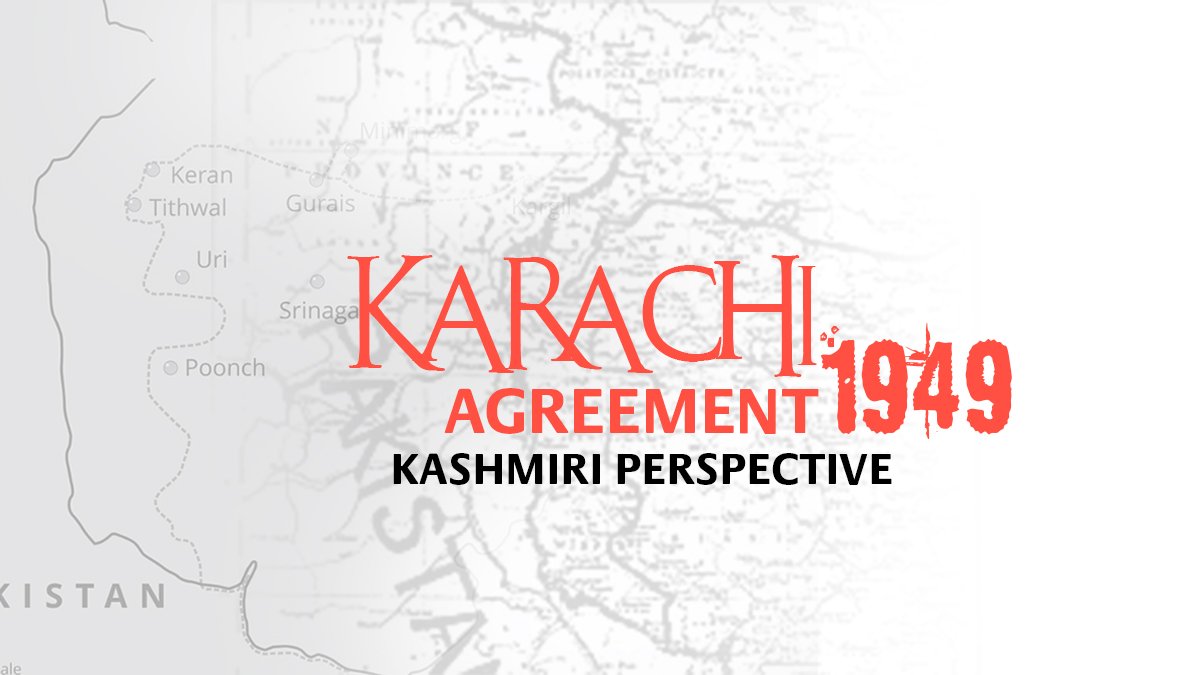
Karachi Agreement 1949: Kashmiri Perspective
By Waheeda Jammu Kashmiri
April 28, 1949, is not just a historical date—it is a turning point that continues to shape the political reality of Jammu and Kashmir. The Karachi Agreement, framed as an administrative necessity in a fragile post-partition moment, is remembered by many Kashmiris as a decision taken about them, without them.
Signed between the Government of Pakistan, the leadership of “Azad” Jammu and Kashmir, and the All Jammu and Kashmir Muslim Conference, the agreement transferred critical powers—defense, foreign affairs, communications, currency, and international representation—to Pakistan. It also placed Gilgit-Baltistan under direct federal administration. What remained with Azad Kashmir was limited internal authority, increasingly overshadowed by decisions made in Islamabad.
A Legacy of Disempowerment
For many in Pakistan-administered Kashmir, the agreement marked the beginning of constrained autonomy. Political activist Sughara Nisa argues that the Karachi Agreement, followed by the 1974 Interim Constitution Act, systematically stripped Kashmiris of their authority. Key governance sectors were centralized, leaving local institutions with symbolic control rather than real power.
This raises a fundamental question: if Azad Kashmir is meant to be “autonomous,” why are major decisions still controlled from outside the region?
The sense of disempowerment is not limited to AJK. In Gilgit-Baltistan, the grievances run even deeper.
The Question of Representation
Advocate Asif Naji from Skardu highlights what many consider the most critical flaw of the agreement: exclusion. The people of Gilgit-Baltistan were not represented in a decision that directly determined their political future.
This leads to unavoidable questions:
- Why were the people of Jammu and Kashmir—especially Gilgit-Baltistan—not made part of the agreement?
- Who gave the signatories the authority to speak on behalf of all Kashmiris?
- Can any agreement claim legitimacy if it excludes the very people it governs?
For decades, Gilgit-Baltistan has remained in a constitutional grey zone—neither fully integrated nor fully autonomous—raising further concerns about political rights, identity, and access to resources.
A Contested Framework
Voices from across the region continue to challenge the legitimacy of the Karachi Agreement. The Karakoram Students Organization questions both its secrecy and its logic: if earlier claims of accession existed, why was a closed-door agreement necessary? And if such a decision had to be made, why were local representatives absent?
Similarly, civil society groups like Community Library Bagh describe the agreement as a “document of subjugation,” reflecting a widespread perception that it imposed control rather than established partnership.
Political leader Idrees Sharrar views the agreement as outdated and persistently controversial. He argues for its restructuring, proposing a unified administrative framework combining Azad Kashmir and Gilgit-Baltistan as a more representative and stable alternative.
Sardar Anwar echoes this sentiment, calling for the complete dismantling of the 1949 framework and the creation of a joint national government that genuinely reflects the will of the people.
The Unanswered Questions
More than seven decades later, the Karachi Agreement still leaves behind a trail of unresolved questions:
Why were decisions of such magnitude made without public consent?
On what democratic basis were powers transferred away from the people?
Why has there never been a transparent public debate or referendum on these arrangements?
Is the Karachi Agreement still relevant today, or has it outlived its legitimacy?
These are not merely historical inquiries—they are living questions that continue to shape political consciousness across the region.
A Kashmiri Perspective Forward
The debate around the Karachi Agreement is not just about the past; it is about the future. While some defend it as a pragmatic step taken in extraordinary circumstances, a growing number of Kashmiris see it as an unfinished and flawed arrangement that demands reevaluation.
At its core, the issue is simple yet profound: the right of a people to participate in decisions about their own political destiny.
Until that principle is fully realized, April 28, 1949, will remain not just a date in history, but a symbol of a voice that was never fully heard—and a question that still seeks an answer.
About Author

-
I am a Computer Science student originally from Mirpur, in Pakistan-administered Kashmir, and currently based in London. Alongside my academic pursuits, I am deeply committed to writing, with a particular focus on local and political issues affecting my homeland. As a contributor to KiNewsHD, I strive to amplify underrepresented perspectives and foster greater awareness through thoughtful, informed commentary.
I am a co-founder of JFJK and previously served as President of its UK zone, where I advocated for the rights and voices of the Kashmiri people, including the aspiration for an independent Jammu and Kashmir. In addition to my advocacy work, I am the founder of K2 Creative Agency, reflecting my interest in creative expression and digital engagement.
As a feminist, I am guided by a strong belief in equality and social justice. I use my platform to engage with issues that matter, drawing inspiration from Shaheed Maqbool Butt, whose legacy continues to shape my perspectives and commitment to activism.
Latest News!
 News06/24/2026The Blood of Our Martyrs Cries Out: Pakistan’s Brutal Crackdown on JAAC Protests in Azad Kashmir
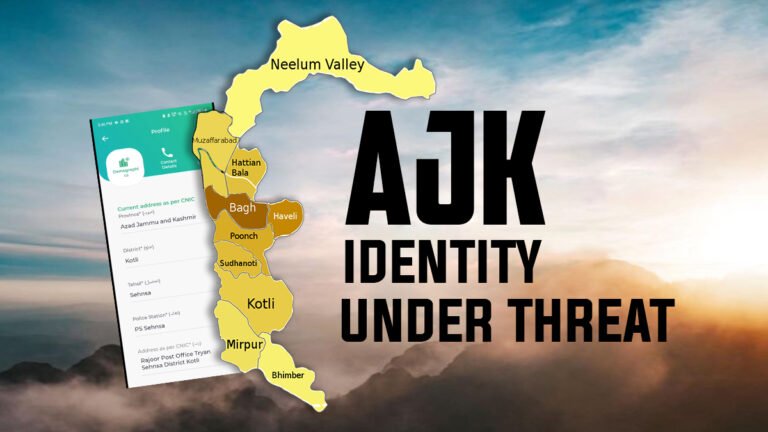
 News05/29/2026AJK Identity Under Threat
 News05/22/2026Hamza Burhan Killed in Muzaffarabad: Kashmiris Trapped Between Indian Propaganda and Pakistani Hypocrisy
 Blog05/20/2026Troop Withdrawal in Jammu and Kashmir: Debate and Justification