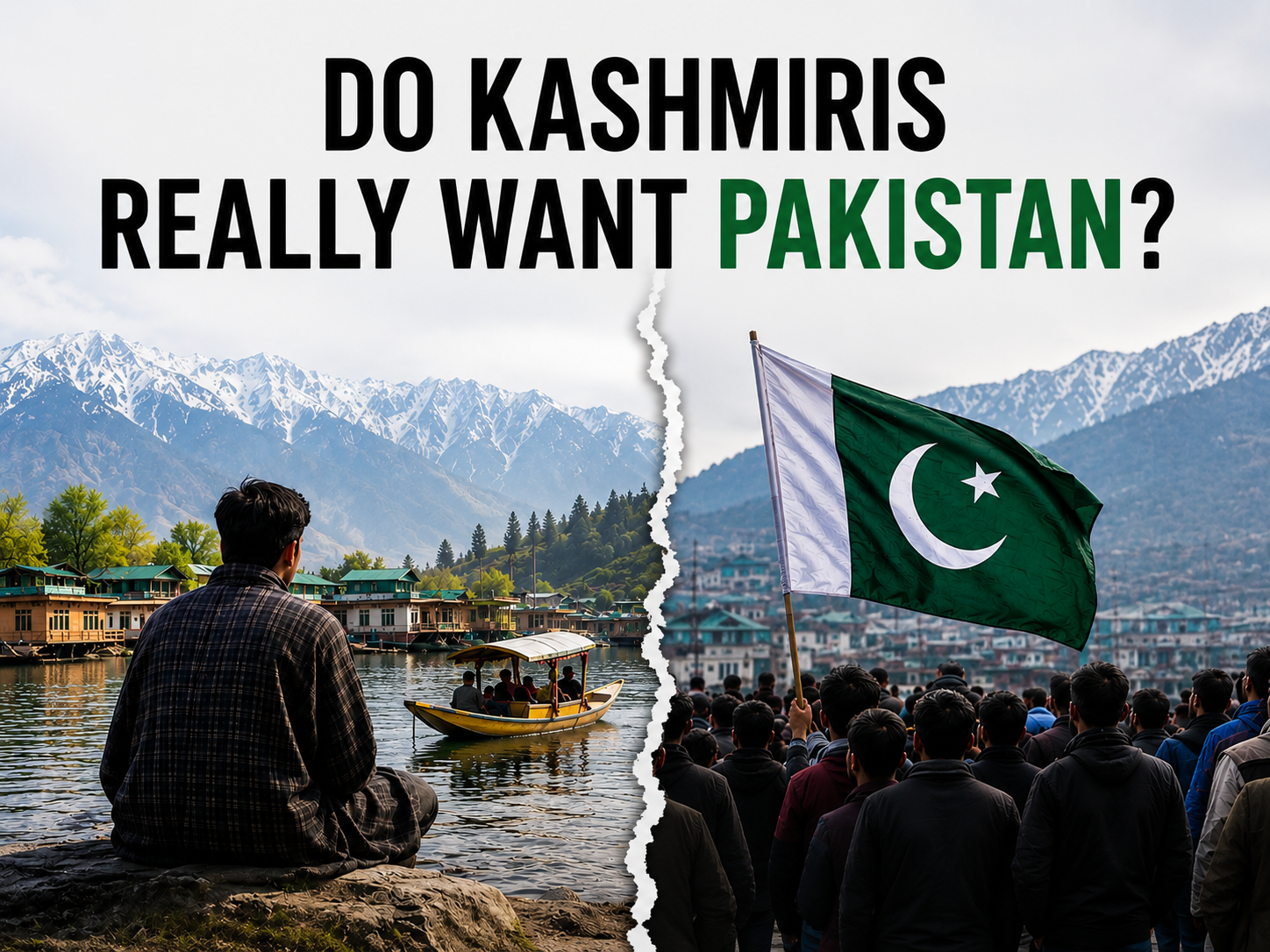
Do Kashmiris Really Want Pakistan? Facebook Reactions Expose a Deep Divide
Written by Waheeda Jammu Kashmiri
A recent Facebook post by Siasat.pk quoted the DG ISPR saying that “the future must be decided by Kashmiris” and that their choice is clearly Pakistan. The post, which also highlighted an image quoting Gharida Farooqi on Pakistan’s diplomatic position and Donald Trump’s proximity to Pakistan, triggered a heated comment section and a sharp division of opinion.
What emerged from the comments was not a single Kashmiri viewpoint; in fact, the strongest reactions came from Kashmiris themselves—particularly those from Pakistan-administered Kashmir—pushing back against the idea that their choice is uniformly Pakistan.
Self-Determination, Not Annexation
A number of commenters insisted that Kashmiris do not see their future as lying with either Pakistan or India. Faisal Malik wrote that Kashmir has never been Pakistan, never been India, and should remain on the path toward self-determination. Khan Irfan Khan said the same, arguing for “Free Jammu and Kashmir” and calling self-determination a proven right.
Sardar Shahzaib Akhter described the real choice as an “independent, dignified, sovereign Jammu Kashmir,” rejecting both India and Pakistan. Zohaib Mughal Kashmiri and Shoaib Jarral Kashmiri also expressed support for a fully self-governing Kashmiri state. Zahid Ali Kashmiri said the future of Kashmir is for Kashmiris to decide, not outsiders. Muhammad Saeed and Um Ar Malik similarly emphasized clear support for self-rule and autonomy.
Strong Rejection of Pakistan
Several commenters went further and said Kashmiris do not want to live with Pakistan at all. Hassan Anwar bluntly wrote that Kashmiris never want to live with Pakistan. Syed Abid Hussain Kazmi said Kashmiris do not prefer Pakistan, while Faraz argued that Kashmiris want a separate state rather than annexation by either side.
Muhammad Nadeem said Kashmiris want an independent and peaceful state, and that Pakistan’s political class and establishment have disappointed them for decades. He added that Kashmiris have been used for 70 years while their real aspirations were ignored. M Arif Kashmiri said Kashmiris themselves must secure their freedom and that the state of Kashmir was once independent before outside powers intervened.
Pakistani Voices of Frustration
Not all criticism came from Kashmiris. A large number of Pakistani commenters also mocked the claim that Kashmiris would choose Pakistan, often linking their response to Pakistan’s domestic crisis. Ansar Sajjad and Amir compared Kashmir with Pakistan’s worsening economic situation, especially rising fuel prices. Zain Raza pointed to inflation, business collapse, and weak investment as evidence that Pakistan is not in a position to attract anyone.
Javaid Iqbal argued that Kashmiris would not want to join a country facing expensive petrol, costly electricity, customs burdens, and weak living conditions. Zahra similarly questioned why anyone would choose Pakistan if they would inherit high prices and poor services. Muhammad Asif Riaz sarcastically suggested that if the government ever truly resolved Kashmir, people would accept it as rulers for life.
Anger at State Narratives
Many comments focused less on Kashmir itself and more on distrust of Pakistan’s military and political messaging. Ishfaq Ahmed said the DG ISPR should be stopped from making statements that sound like threats or propaganda to ordinary Pakistanis. Ak Malik accused the DGISPR of making promises that never materialize, while Aziz called him intoxicated.
Sohaib Kashmiri and Malik were especially harsh, accusing the army of using the Kashmir issue for its own interests. Malik said the issue has been used for politics and profit for decades and that those who cannot solve their own internal problems cannot free Kashmir. Rubina Affan and Syed Zada also mocked the post as self-created and self-answered propaganda.
Kashmir as a Separate Identity
A recurring theme in the comment section was the idea that Kashmir is not a bargaining chip between India and Pakistan, but a people with their own identity and political future. Usama Suleman thanked Pakistani supporters but implied that Kashmiris have already answered the question themselves. Rashid Anjum Kashmiri said that if Kashmiris are to be free from Pakistan as well, then that too should be accepted. Muhammad Musab said Kashmir belongs only to Kashmiris and should become a separate state.
Sheroz Khan Kashmiri challenged Pakistani claims by asking why Pakistan has not even resolved water issues with India, let alone Kashmir. Iran Bilal compared conditions in Pakistani Kashmir with those in Pakistan itself and concluded that Kashmiris know the difference. Aziz – Kashmiri summed up one side of the debate in a single line: Kashmir is neither Pakistan nor India, but a free homeland.
Conclusion
The comment section shows that the claim “Kashmiris clearly choose Pakistan” is far from settled. Some Pakistani users still support the old national narrative, but many Kashmiris in the thread rejected it and demanded independence. The most consistent message across the discussion was simple: Kashmiris want their own voice, not decisions made for them by Islamabad or military institutions.
About Author

-
I am a Computer Science student originally from Mirpur, in Pakistan-administered Kashmir, and currently based in London. Alongside my academic pursuits, I am deeply committed to writing, with a particular focus on local and political issues affecting my homeland. As a contributor to KiNewsHD, I strive to amplify underrepresented perspectives and foster greater awareness through thoughtful, informed commentary.
I am a co-founder of JFJK and previously served as President of its UK zone, where I advocated for the rights and voices of the Kashmiri people, including the aspiration for an independent Jammu and Kashmir. In addition to my advocacy work, I am the founder of K2 Creative Agency, reflecting my interest in creative expression and digital engagement.
As a feminist, I am guided by a strong belief in equality and social justice. I use my platform to engage with issues that matter, drawing inspiration from Shaheed Maqbool Butt, whose legacy continues to shape my perspectives and commitment to activism.
Latest News!
 News06/24/2026The Blood of Our Martyrs Cries Out: Pakistan’s Brutal Crackdown on JAAC Protests in Azad Kashmir
 News05/29/2026AJK Identity Under Threat
 News05/22/2026Hamza Burhan Killed in Muzaffarabad: Kashmiris Trapped Between Indian Propaganda and Pakistani Hypocrisy
 Blog05/20/2026Troop Withdrawal in Jammu and Kashmir: Debate and Justification