Changing U.S. Policy on Jammu and Kashmir And the Kashmiri People Caught Between Two Nuclear Powers
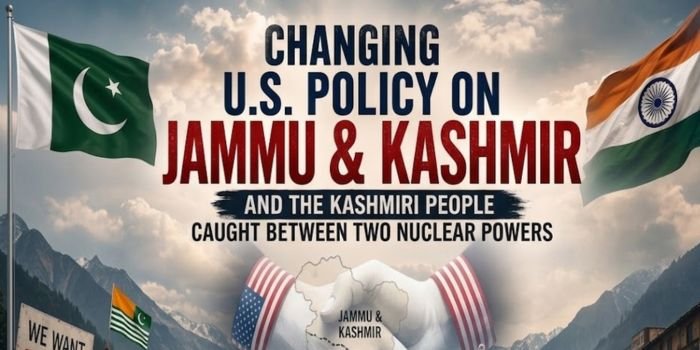
The visit of the U.S. Ambassador to India, Sergio Gor, to Srinagar, and the statement attributed to him describing Jammu and Kashmir as “an important part of India,” have once again raised a number of serious questions about the political future of Jammu and Kashmir. This is not merely a political or diplomatic disagreement between Pakistan and India; it concerns the future of millions of Kashmiris who have endured the political, humanitarian, social and economic consequences of this conflict for several decades.
For a citizen of Jammu and Kashmir, the fundamental question is this: if global powers are changing their policies and diplomatic language regarding Jammu and Kashmir, where do the Kashmiri people stand in this process? Will decisions about the future of Kashmir continue to be made only in New Delhi, Islamabad and Washington, or will the Kashmiri people also have the right to express their views and participate in deciding their own political destiny?
To view Jammu and Kashmir merely as a territorial dispute between India and Pakistan is to ignore one of the fundamental parties to the issue: the Kashmiri people. India and Pakistan are certainly important parties to the dispute, but the Kashmiri people are not mere spectators. This is their homeland. Their families have been divided, generations have been affected by the conflict, and the question of their political future remains unresolved.
That is why the diplomatic language used by any global power regarding Jammu and Kashmir carries extraordinary significance. If a U.S. ambassador describes a region whose political status has remained disputed for decades as “an important part of India,” it is natural to ask whether this was simply a diplomatic statement, a comment made in a particular political context, or a possible indication of a change in U.S. policy.
This distinction is important because a statement by an ambassador and the formal foreign policy of a state are not necessarily the same thing. Therefore, the U.S. government should clarify whether the statement made in Srinagar reflects the official policy of the U.S. government or should instead be understood as a diplomatic expression of opinion. In a sensitive and historic dispute such as Jammu and Kashmir, unclear or contradictory diplomatic language can add further complications to an already complex situation.
But it would also be wrong to reduce the Kashmir issue merely to diplomatic statements and the positions of states. The real issue concerns the lives, freedoms, fundamental rights, political empowerment, human dignity and security of the Kashmiri people.
In Pakistan-administered Jammu and Kashmir, the movement for fundamental rights that has continued for the past three years has demonstrated that the Kashmiri people are raising their voices for their basic human, political and economic rights. If these demands are met not through political dialogue, democratic processes and the protection of people’s rights, but through the deployment of Pakistani forces, the use of force, the killing of unarmed and peaceful civilians, arrests and alleged acts of violence, the problem is not resolved; rather, it becomes even deeper.
Regardless of which side exercises state power, if ordinary citizens are subjected to fear, violence, arrests, killings or restrictions on their fundamental freedoms, this cannot simply be dismissed as a law-and-order issue. The real strength of a state lies not merely in its forces, weapons or administrative authority, but in its ability to protect the rights of its citizens and maintain their trust.
For a citizen of Jammu and Kashmir, the situation is particularly painful because on the other side, in Indian-administered Jammu and Kashmir, questions have also continued to be raised over the heavy presence of Indian forces, prolonged security measures, arrests and the killing of civilians. International and human rights organisations have also, from time to time, expressed concerns about the situation regarding human rights, political freedoms, freedom of expression, civilian protection and democratic activity.
Thus, on both sides of the Line of Control, the same tragedy continues in different forms: the Kashmiri people remain caught between centres of power.
On one side, India is attempting to maintain its control over Jammu and Kashmir through state power, administrative policies and security measures. On the other, if voices demanding fundamental rights in Pakistan-administered Jammu and Kashmir are also suppressed through force, the Kashmari people are confronted with the same fundamental question in both situations: where is the importance given to their rights, their freedom and their political voice?
For the Kashmiri people, the question has now become more important than ever: for how long will they continue to be asked to sacrifice for other countries in the name of state power, geopolitics, national security and national interests?
On both sides of the Line of Control, the value of human life is the same. A Kashmiri from Srinagar or from Muzaffarabad, Rawalakot, Poonch, Mirpur or any other part of the region deserves equal value for their life, dignity, freedom and fundamental rights. One Kashmiri’s life cannot be considered less valuable simply because they were born on one side of the Line of Control, nor can another Kashmiri’s life be considered more valuable because they live on the other side.
This is where the responsibility of the international community also becomes extremely important.
If global powers genuinely believe in human rights, democracy, civil liberties, the rule of law and sustainable peace, they must apply the same principles to Jammu and Kashmir. Whether they have strategic relations with India or diplomatic ties with Pakistan, the geographical, economic or strategic interests of any state should not take precedence over human life and fundamental human rights.
The United States is a global power and has the right to formulate its foreign policy according to its national interests. Its growing strategic relationship with India, India’s importance in the context of competition with China, and its diplomatic relations with Pakistan are all part of Washington’s own interests. But for a Kashmiri, the fundamental question is whether the political rights, human dignity and future of the Kashmari people also matter amid the strategic interests of global powers.
If Washington considers Jammu and Kashmir a disputed issue, this principle should also be reflected in its diplomatic language. And if the United States has changed its policy on Kashmir, that change should be clearly and officially stated. Unclear, contradictory or differing diplomatic statements on different occasions can make the Kashmir issue even more complicated.
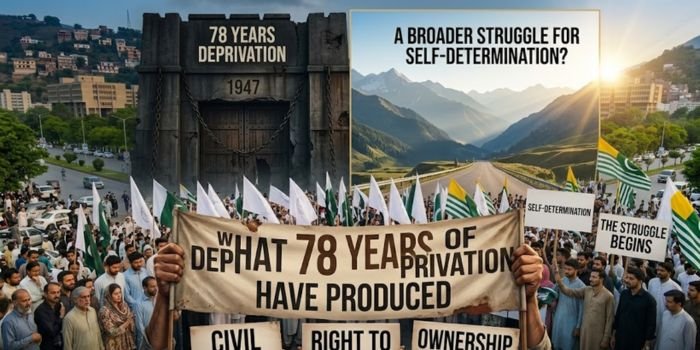
The fundamental question in Jammu and Kashmir is not simply whether Kashmir belongs to India or Pakistan. The fundamental and genuine question is: when and how will the Kashmiri people be given the right to decide their own future?
This is not a slogan against any particular country. It is a fundamental political and human question. If the people of Jammu and Kashmir do not have the right to express their views about their own future, then all international discussions about Kashmir ultimately remain confined to the interests of states and the balance of power.
Keeping Jammu and Kashmir frozen as a protracted unresolved conflict cannot, under any circumstances, constitute a permanent solution. The Line of Control, military presence, political division, separation of families, restrictions on movement, economic difficulties and continuing uncertainty have affected generations of Kashmiri society.
There are generations who have grown up seeing Kashmir as an unresolved issue. One generation left loved ones on the other side of the Line of Control; another experienced military tensions and political uncertainty; while today’s younger generation is asking when its future will finally be decided and where its own voice will be in that decision.
For the people of Pakistan-administered Jammu and Kashmir, it is equally important to ask how effective the voice of the Kashmari people themselves is in politics conducted in the name of Jammu and Kashmir. Kashmiris are not merely an element of any state’s foreign policy. They are human beings and citizens with the right to express their views about their political rights, democratic authority, fundamental freedoms, economic rights and dignified future.
Similarly, it is important not to view the Kashmir issue solely through anti-India or anti-Pakistan sentiments. There is a need for a clear, democratic and workable political vision concerning the political future, democratic authority, fundamental rights and dignified life of the Kashmari people.
If political debate about Jammu and Kashmir remains confined to the question of “India or Pakistan?”, where will the political aspirations of the Kashmari people themselves find a place? This is precisely the question that requires serious dialogue about the future of Kashmir.
Today, Jammu and Kashmir is located in an extremely sensitive geopolitical region. On one side is the longstanding dispute between India and Pakistan; on the other is the background of tensions along the India-China border. Meanwhile, growing strategic relations between the United States and India are making the region’s politics even more complex.
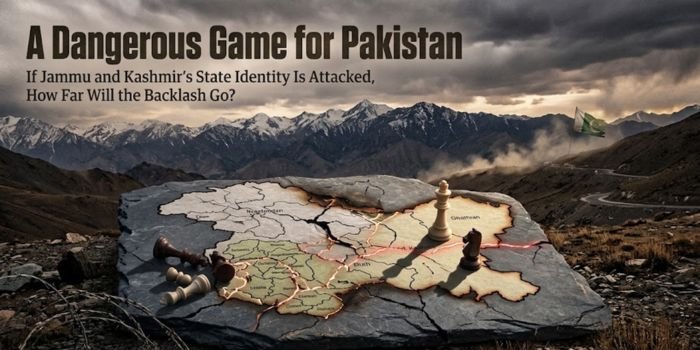
But viewing Jammu and Kashmir solely through the prism of India’s strategic importance in relation to China, or India’s interests vis-à-vis Pakistan, would be a dangerous oversimplification. Jammu and Kashmir is not merely a chessboard on which major powers move their strategic pieces. The lives, identities, political rights, economic interests and futures of millions of people are tied to this land.
For major powers, Jammu and Kashmir may be an important region in the geopolitics of South Asia. But for the Kashmari people, it is their home. For them, it is not merely a question of borders, mountains, rivers and strategic routes. It is a question of home, family, identity, freedom, employment, education, security and the future.
Pakistan should not limit its response to any possible change in U.S. policy to statements of protest. Islamabad should seek a clear explanation from Washington regarding the status of the U.S. ambassador’s statement and whether it reflects the official policy of the U.S. government.
At the same time, Pakistan must seriously reconsider its own Kashmir policy. The Kashmari people should not merely be mentioned in diplomatic statements; they should be genuinely included in the political and diplomatic process concerning Kashmir. It is not enough for the world to be told that Jammu and Kashmir is a disputed issue. It is also necessary for the political aspirations, rights and voices of the Kashmari people themselves to be represented at the international level.
If Pakistan genuinely supports the Kashmari people’s right to determine their political future and their political rights, then it must also strengthen democratic institutions, civil liberties, political dissent, freedom of expression and the right to peaceful protest in Pakistan-administered Jammu and Kashmir. The moral strength of any political position in the world is demonstrated not only through words, but also through the practical conduct of those who claim to uphold it in the territory under their administration.
The Kashmari political leadership also has a responsibility. It must not remain confined merely to anti-India or anti-Pakistan narratives. Instead, it should present a clear, democratic and workable political agenda for the future of the Kashmari people. The politics of the future cannot be built solely on protests, emotional slogans and references to the past. Kashmari leadership must also explain what kind of political system, what form of rights and what kind of future it seeks.
Above all, the humanitarian tragedy continuing on both sides of the Line of Control must end. The Kashmari people must be freed from killing, violence, fear, arrests, enforced silence and the unnecessary use of force. Ending this suffering is not merely the responsibility of one country; it is also a responsibility of the international community. The international community should assess the human rights situation on both sides according to the same standards and should not compromise on human rights principles because of its relations with states.
The Kashmir issue will not be resolved through guns, war, coercion, emotional slogans or the strategic interests of major powers. A sustainable solution can only emerge when the genuine political participation of the Kashmari people, their fundamental rights, their dignity, their security and their future are placed at the centre of the process.
The world must understand that Jammu and Kashmir is not merely a line drawn on a map. It is a question of families that have been separated for decades, generations that have grown up amid political uncertainty, and young people who want clear answers about their future.
It is also essential that global powers do not view their policies toward Jammu and Kashmir solely through the lens of their strategic interests. If the United States considers its relationship with India important for competition with China, it has the right to shape its foreign policy accordingly. But such a strategic relationship should not mean that the fundamental humanitarian and political questions of Jammu and Kashmir are ignored.
Similarly, Pakistan must recognise that Jammu and Kashmir cannot be treated merely as an issue of its foreign policy. The Kashmari people must be recognised as genuine stakeholders in this political question. The stronger and more independent the voice of the Kashmari people becomes in matters concerning Jammu and Kashmir, the stronger the moral and democratic foundation of any potential political solution will be.
The visit of the U.S. Ambassador to Srinagar and the statement attributed to him are important because they bring a fundamental question back into focus: if the United States is changing its policy on Kashmir, it should announce that change clearly; and if its policy has not changed, the U.S. government should ensure clarity and consistency in its diplomatic statements.
But one reality cannot be ignored: no serious discussion about the future of Jammu and Kashmir can be complete without the Kashmari people. Kashmiris are not merely a geographical component of a dispute; they are fundamental human and political stakeholders in it.
Ending the suffering of the Kashmari people caught between state power on both sides, listening to their voices, ensuring the protection of their fundamental rights, and seeking a sustainable, just and acceptable solution to the Jammu and Kashmir issue while taking their political aspirations into account are responsibilities shared by the international community, India and Pakistan.
It is time for decisions about Kashmir to no longer remain confined to New Delhi, Islamabad and Washington. The world must also listen to the voice of the Kashmari people.
The blood of Kashmiris must no longer be spilled on both sides of this ominous, bloody line.
About Author

-
Khawaja Kabir Ahmed is a British/Belgian Kashmiri journalist who has been associated with the field of journalism since his educational days.
He holds a degree in journalism from the UK, is the Director News/Director Public Affairs and Anchorperson of the web TV channel Jammu Kashmir TV.
He writes on various topics in print journalism, focuses on the state of Jammu and Kashmir and is a promoter of fundamental human rights.
Latest News!
 Opinion09/21/2026Yasin Malik’s Case: A New Legal Turn and a Question for the Global Conscience
 Opinion09/15/2026After Balochistan, Pakistan-Administered Jammu Kashmir?
- Opinion09/14/2026Sanctions on Israel: A Major and Positive Step —But Why Not the Same for India and Pakistan?
 Opinion08/20/2026Changing U.S. Policy on Jammu and Kashmir And the Kashmiri People Caught Between Two Nuclear Powers