A Dangerous Game for Pakistan:If Jammu and Kashmir’s State Identity Is Attacked, How Far Will the Backlash Go?
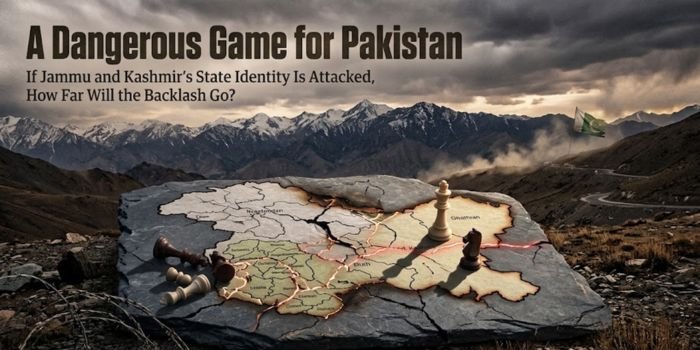
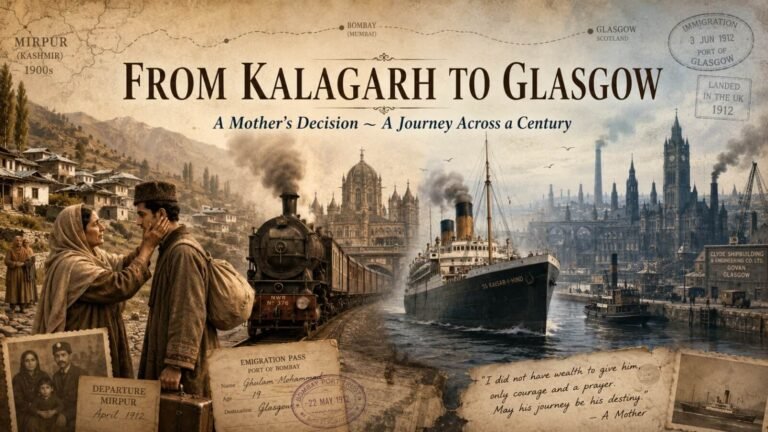
When India altered the constitutional status of Indian-administered Jammu and Kashmir in an attempt to merge it into Union Territories—and ultimately did so—Kashmiris around the world took to the streets in protest. Similarly, there have been continuous and large-scale protests abroad in support of the political, constitutional and civil rights of the people of Gilgit-Baltistan. In both cases, a large and prominent proportion of those participating in protests abroad have been people from Pakistan-administered Jammu and Kashmir who are settled in different parts of the world.
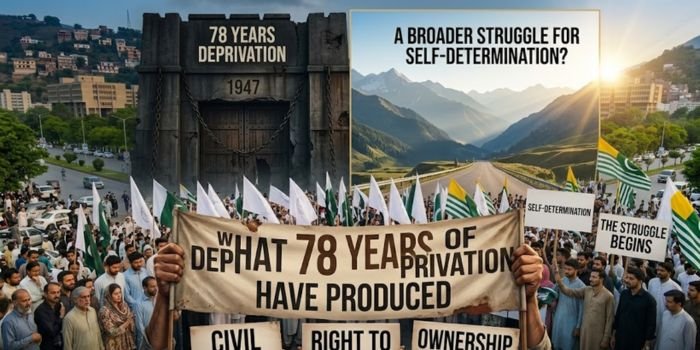
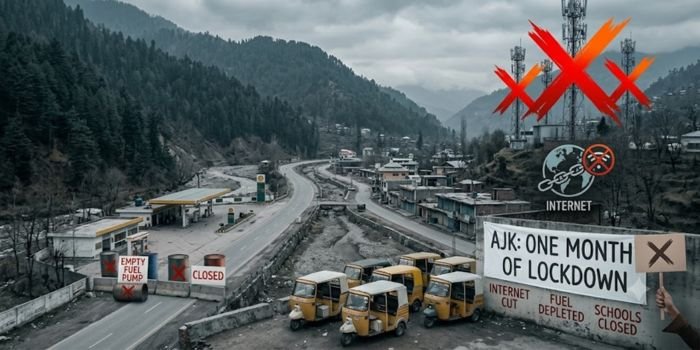
These were not isolated protests, nor were they confined to a single day or a single incident. Whenever reports emerged of oppression, violence, arrests or human rights violations in Indian-administered Jammu and Kashmir, Kashmiris living abroad took to the streets. Whenever the question of the rights of the people of Gilgit-Baltistan was raised, the same Kashmiris stood up in protest. And today, when people in Pakistan-administered Jammu and Kashmir themselves are on the streets demanding their rights, men, women, children, elderly people and young people have been protesting for months. Lives have been lost, people have been killed, others injured, and large numbers have been imprisoned, while the use of state power has reached unprecedented levels. Kashmiris living abroad have not remained silent spectators; they too have continued to protest.
This reality should serve as an extremely serious warning to Pakistan’s political and military decision-makers.
If Pakistan’s political or military forces believe that they can use force, violent repression, fear and even the taking of lives to attack the state identity, political character or constitutional status of Pakistan-administered Jammu and Kashmir—and play the same game that India has played in Indian-administered Jammu and Kashmir—then they may be heading towards one of the greatest political mistakes in their own history.
Because this time, the matter would not be limited to protests concerning another part of Kashmir. This would be about people’s own homeland.
It is a law of nature that human beings—and even animals—have an attachment to their ancestral land. The farther a person lives from their homeland, the more deeply that attachment can affect them. In such circumstances, those who have protested for Indian-administered Jammu and Kashmir, stood up for the rights of Gilgit-Baltistan and kept the Kashmir issue alive around the world may react very differently if they begin to feel that Pakistan itself is attacking the state identity of their ancestral homeland.
Their response may not remain merely a matter of protest. It could develop into a major political and international challenge.
Pakistan must understand that a significant proportion of the population of Pakistan-administered Jammu and Kashmir lives abroad. These people are present in major cities across some of the world’s most influential countries. They are politically active and have access to international media, human rights organisations, parliaments and political institutions. They possess the ability to bring developments in their homeland to international attention.
For these people, Jammu and Kashmir is not merely a collection of administrative territories divided on a map. They continue to view the entire state within its historical and political context as a single historic and political entity, and regard the rights of the people of all its parts—Pakistan-administered Jammu and Kashmir, Gilgit-Baltistan and Indian-administered Jammu and Kashmir—as interconnected.
That is why, if Pakistan attempts to interfere with the state identity of the territory under its administration, it could find itself facing an even more complicated political situation than India has faced.
If Kashmiris who have protested against India take to the streets against Pakistan in defence of their own ancestral homeland, this will no longer be merely an internal Pakistani issue. It could become an international political crisis of a scale that today’s decision-makers may not have fully anticipated.
The greatest danger for Pakistan is this: the very population that Pakistan has relied upon for decades as part of its diplomatic and political voice on the Kashmir issue could begin to see any unilateral action by Pakistan as an attack on their homeland. In that event, Pakistan’s own narrative of defending Kashmir could become the subject of an extremely difficult question.
Pakistan’s rulers must abandon the illusion that the political identity of a territory can simply be changed through force, administrative authority or constitutional amendments.
Decisions concerning people’s homes, land, history, identity and political future cannot be made behind closed doors.
If anyone believes that the people of Pakistan-administered Jammu and Kashmir, or the people from that territory living across the world, will quietly accept the disappearance of their state identity, that would be a dangerous misconception.
Today, the same Kashmiris who protest against Indian actions also raise their voices for the rights of Gilgit-Baltistan and protest around the world against alleged injustices in their own homeland.
If Pakistan attacks their own home, the resulting fire of protest will not remain confined to Muzaffarabad, Rawalakot, Mirpur or any single city. Its echoes could reach London to New York, Birmingham to Washington, Europe to the Gulf, and every major city around the world where Kashmiris live.And this time, the question will not be merely about rights.
The question will be this:
For decades, Pakistan and India have claimed to speak about the future of the state of Jammu and Kashmir. But do the people of that state themselves have the right to decide their own future—or do they not?
If Pakistan genuinely claims to support the Kashmiri people, then it must first respect the political consent, state identity and right to self-government of the people of Pakistan-administered Jammu and Kashmir.
Otherwise, the very game Pakistan attempts to play against others today could become, tomorrow, one of the most powerful questions raised against Pakistan on the international stage.
This is not the time for Pakistan’s rulers to celebrate or demonstrate their power. It is a time for extremely serious reflection.
Because mistaking the patience of the people of Jammu and Kashmir for weakness could prove to be a historic mistake—one that may push Pakistan, not into a confrontation with India, but into an extraordinary political crisis with the people of its own administered territory and with its own Kashmiri population spread across the world.
About Author

-
Khawaja Kabir Ahmed is a British/Belgian Kashmiri journalist who has been associated with the field of journalism since his educational days.
He holds a degree in journalism from the UK, is the Director News/Director Public Affairs and Anchorperson of the web TV channel Jammu Kashmir TV.
He writes on various topics in print journalism, focuses on the state of Jammu and Kashmir and is a promoter of fundamental human rights.
Latest News!
 Opinion09/21/2026Yasin Malik’s Case: A New Legal Turn and a Question for the Global Conscience
 Opinion09/15/2026After Balochistan, Pakistan-Administered Jammu Kashmir?
- Opinion09/14/2026Sanctions on Israel: A Major and Positive Step —But Why Not the Same for India and Pakistan?
 Opinion08/20/2026Changing U.S. Policy on Jammu and Kashmir And the Kashmiri People Caught Between Two Nuclear Powers