AJK Identity Under Threat
Written by Waheeda Jammu Kashmiri
Pakistan has long positioned itself as the “voice” and “defender” of Kashmir on the global stage. Since 1947, it has claimed to champion the Kashmiri people’s right to self-determination. Yet for many residents of Pakistan-administered Kashmir (AJK), this narrative captures only part of the story. From the ground, a far more complex reality emerges—one defined by control, silenced voices, and the gradual erosion of Kashmiri identity.
1947: The Beginning of Intervention
The Jammu and Kashmir conflict did not arise in isolation. In 1947, Pakistani forces attacked Jammu and Kashmir first on 22 October. On 26 October, the Maharaja signed the Instrument of Accession with India, after which Indian forces entered on 27 October.
What Pakistan later framed as “support for Kashmiris” marked the beginning of Kashmiris being sidelined from meaningful control over our own political future. Since then, Jammu and Kashmir has remained divided—not only by the Line of Control, but by competing national narratives that have frequently overlooked the Kashmiri voice itself.
Are Kashmiri Voices Being Suppressed?
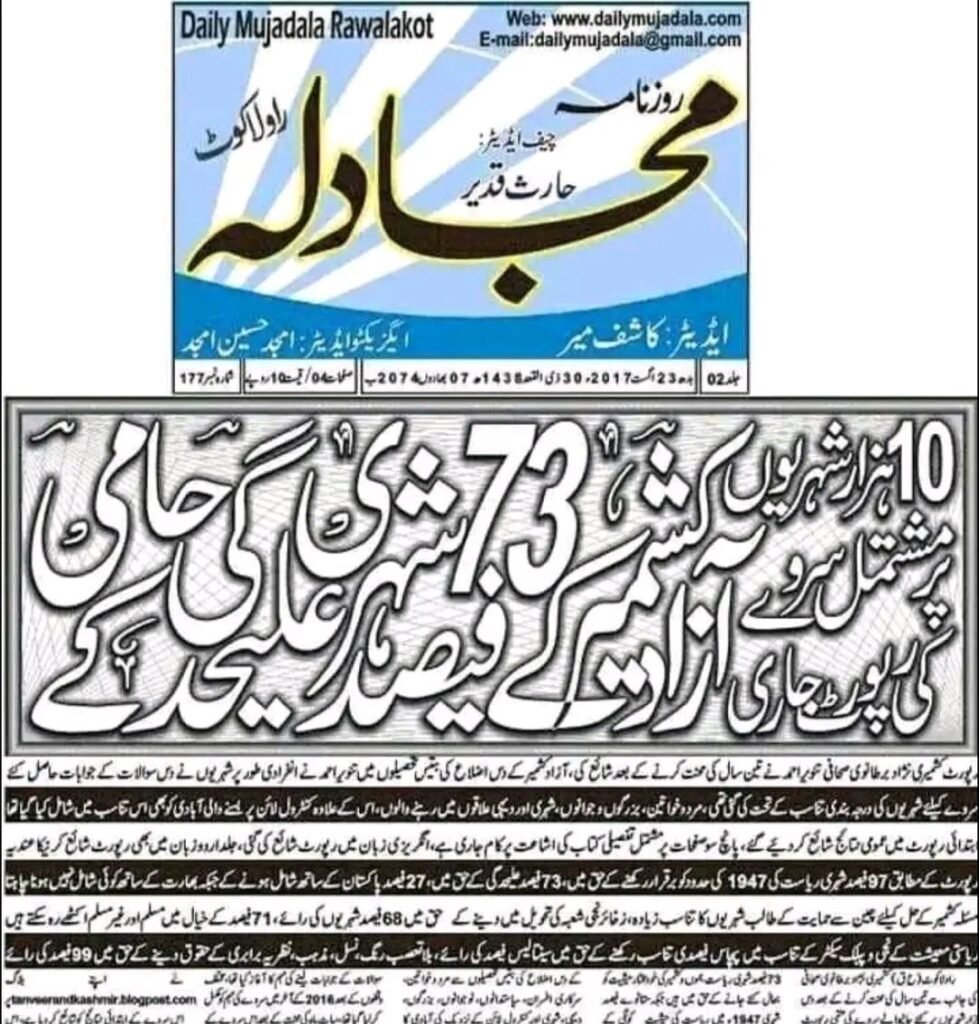
A significant development occurred in 2017 when former BBC journalist and activist Tanveer Ahmed reportedly conducted a large-scale survey across AJK, involving approximately 10,000 respondents. According to Journalist Harish Qadeer of Daily Mujadala (AJK), who published the findings, nearly 73 percent of participants expressed a desire for independence from Pakistan. Following publication, the newspaper was reportedly banned.
2019: A Turning Point Behind Closed Doors
On 5 August 2019, India revoked Articles 370 and 35A, stripping Jammu and Kashmir of its special status. The move sent shockwaves across the region and the world. However, reports suggest it did not occur in isolation.
According to an April 2023 report in The Friday Times, former Pakistan Army Chief General Qamar Javed Bajwa informally informed a group of journalists in 2021 that a “secret deal” on Kashmir had been reached. Senior Pakistani journalist Hamid Mir has also publicly referenced similar claims.
While no official agreement has been publicly confirmed, these statements have intensified speculation that critical decisions about Kashmir’s future continue to be made without genuine Kashmiri participation.
Gradual Integration of AJK into Pakistan?
In the aftermath of the 2019 developments, several steps have raised serious concerns about the evolving status of Pakistan-administered Kashmir.
In 2023, major Pakistani banks—including United Bank Limited (UBL), National Bank of Pakistan (NBP), and MCB—were reported to have listed AJK regions under Pakistani provinces such as Punjab and Khyber Pakhtunkhwa in official banking documents. Since NBP is a government-owned bank.

On March 22, 2023, the AJK government issued a notification implementing decisions of Pakistan’s courts within the region, further reducing judicial independence.
These actions suggest a steady movement toward administrative integration.
Identity Under Pressure
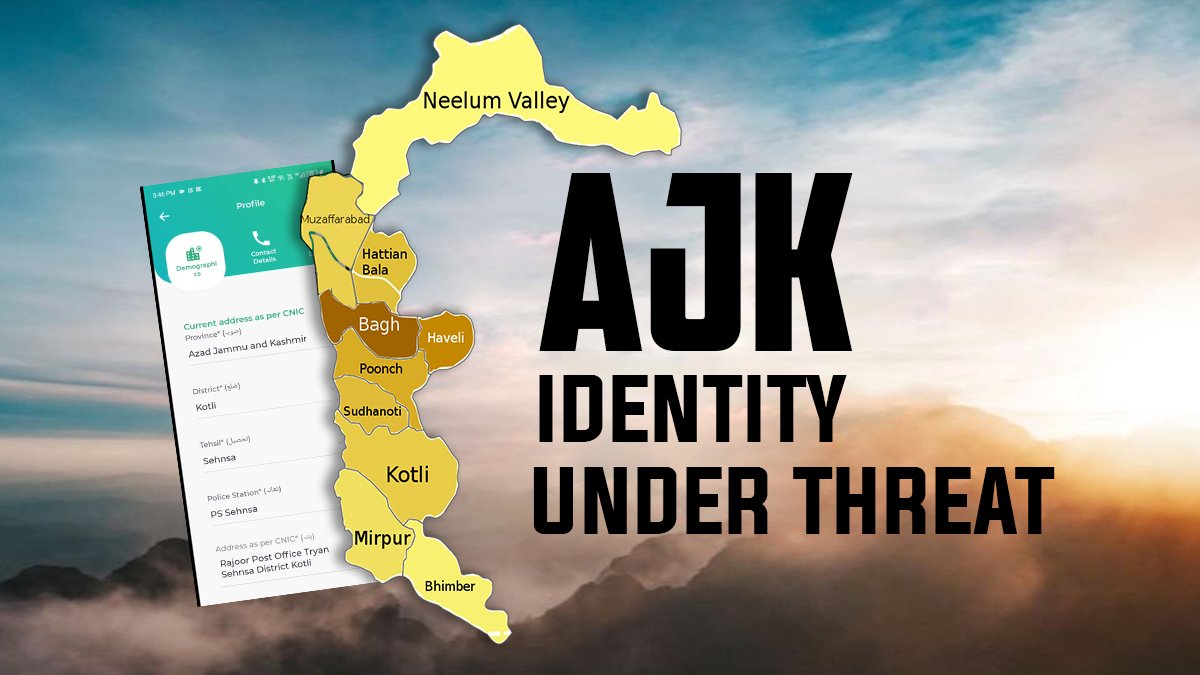
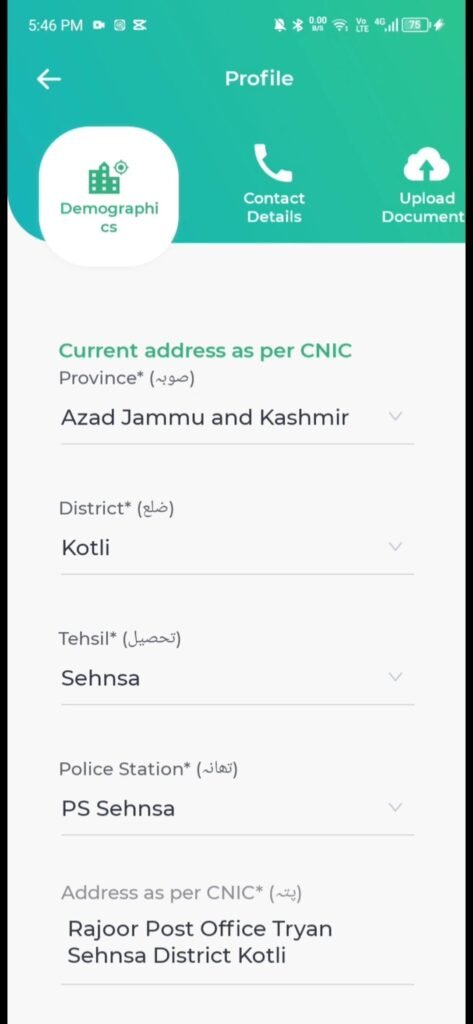
Recent developments have only deepened these concerns. After 20 May 2026, Pakistan’s official “Pak Identity” mobile application, available on the Google Play Store, began displaying AJK as a province of Pakistan—contradicting its internationally recognized status as a disputed territory.
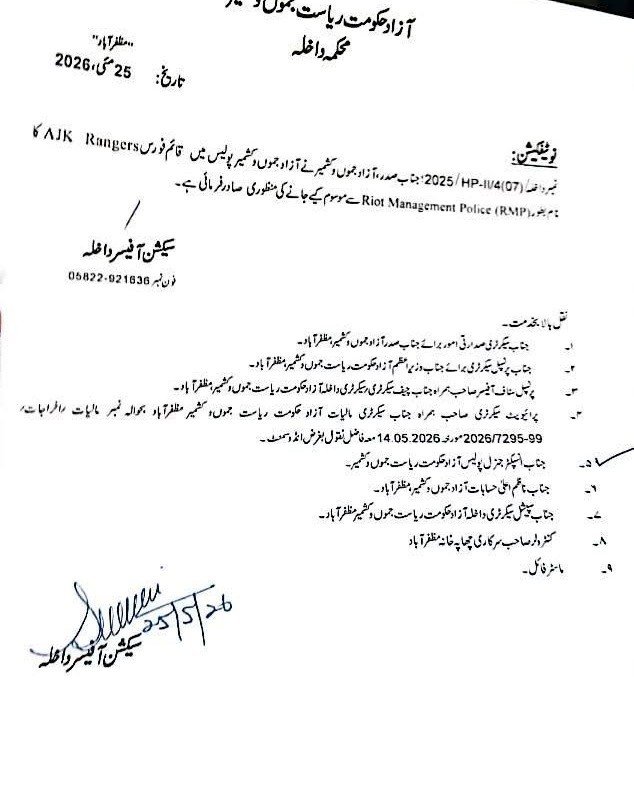
According to a notification dated 25 May 2026, AJK Rangers were reportedly restructured under a Punjab-based framework and renamed “Riot Management Police,” signaling deeper administrative alignment. Step by step, these changes appear designed to blur the distinct identity of AJK.
News has also reached locals about the 28th Amendment to Pakistan’s Constitution, under which AJK may be merged into Punjab and Khyber Pakhtunkhwa or declared a province of Pakistan. In response, locals, nationalist leaders, and the Jammu Kashmir Joint Awami Action Committee (JAAC) have issued strong warnings to Pakistan.
Ghulam Akbar, zonal vice president of JKLF from Bhimber district in AJK, has strongly opposed any move by the Pakistani government to grant provincial status to Pakistan-occupied Jammu and Kashmir (POJK) or absorb it into other Pakistani provinces. He stresses the need to preserve the distinct identity and homeland of Jammu and Kashmir, urging people to protect their unique regional and historical character rather than accept full integration into Pakistan.
Sardar Umar Nazir Kashmiri, a core member of the Jammu Kashmir Joint Awami Action Committee, has declared that demands for subsidized flour, cheaper electricity, and specific legislative seats remain secondary to the fundamental goal of preserving Azad Jammu and Kashmir’s identity.
Shaukat Nawaz Mir, another core member of the Jammu Kashmir Joint Awami Action Committee, issued a stark warning: If anyone attempts a “night raid” (a secret or sudden move) to make AJK a province or divide it, the people of the state—including every child—will resist to the death. They will not allow it.
Locals have echoed these sentiments on social media, declaring that “every child will be cut to pieces” before Kashmir becomes a province of Pakistan.
The Bigger Question: Who Speaks for Kashmir?
For decades, Pakistan has claimed to represent Kashmir on international platforms. Yet these developments compel a deeper question: Are Kashmiris truly being represented—or are they being managed by an occupier that first attacked our land in 1947?
Today, the Kashmir issue is no longer simply about India versus Pakistan. It is about identity, genuine representation, and—most crucially—whether Kashmiris themselves have the right to determine their own future.
After 78 years, the central question remains unanswered: Who is really speaking for Kashmir—and who is truly listening?
About Author

-
I am a Computer Science student originally from Mirpur, in Pakistan-administered Kashmir, and currently based in London. Alongside my academic pursuits, I am deeply committed to writing, with a particular focus on local and political issues affecting my homeland. As a contributor to KiNewsHD, I strive to amplify underrepresented perspectives and foster greater awareness through thoughtful, informed commentary.
I am a co-founder of JFJK and previously served as President of its UK zone, where I advocated for the rights and voices of the Kashmiri people, including the aspiration for an independent Jammu and Kashmir. In addition to my advocacy work, I am the founder of K2 Creative Agency, reflecting my interest in creative expression and digital engagement.
As a feminist, I am guided by a strong belief in equality and social justice. I use my platform to engage with issues that matter, drawing inspiration from Shaheed Maqbool Butt, whose legacy continues to shape my perspectives and commitment to activism.
Latest News!
 News06/24/2026The Blood of Our Martyrs Cries Out: Pakistan’s Brutal Crackdown on JAAC Protests in Azad Kashmir
 News05/29/2026AJK Identity Under Threat
 News05/22/2026Hamza Burhan Killed in Muzaffarabad: Kashmiris Trapped Between Indian Propaganda and Pakistani Hypocrisy
 Blog05/20/2026Troop Withdrawal in Jammu and Kashmir: Debate and Justification