Three and a Half Years of a People’s Movement, Questions Raised a Year Ago, and a People Paying the Price for Their Sacrifices
Three and a half years have passed since the public movement led by the Jammu Kashmir Joint Awami Action Committee began in the Pakistani-administered state of Jammu and Kashmir. This movement is not merely a series of protests or a struggle to secure the approval of a handful of demands. Rather, it is a broader popular struggle rooted in questions of people’s rights, control over natural resources, economic justice, and political and administrative autonomy. It has brought fundamental issues into public and political debate that have been neglected for decades.
Exactly one year ago, in November 2025, I wrote a column on the same subject entitled: “The Jammu Kashmir Joint Awami Action Committee’s Struggle for Control over Resources and Resolution of Public Grievances, and the Privileges of the Elite.” The central questions raised in that article remain the same: Why do the people of this region not have fair control over their natural resources, electricity, water, land and public revenues? Why must they continue to struggle for affordable electricity, subsidised flour, quality education, better healthcare, employment and a dignified life? And why are the ruling class, political elite and privileged administrative establishment unwilling to reduce the benefits and privileges they enjoy at the expense of public resources?
At the time, while highlighting government expenditure, elite privileges and unnecessary public spending, I argued that most of the people’s basic problems could be addressed if resources were distributed fairly and there were transparency and genuine political will. I made it clear that the problem was not a lack of resources, but their unjust distribution, mismanagement, corruption and the protection of elite interests.
Revisiting that article one year later, it is evident that there has been no significant change in either the fundamental questions or the circumstances that could be considered meaningful progress towards resolving public grievances. The people’s demands remain the same. The lifestyle of the ruling class and the elite remains unchanged, and the system of official privileges and lavish facilities continues to exist. The only significant difference is that, over the past year, the people have paid an extraordinarily high price for their struggle for rights — in human lives.
In particular, reports have emerged indicating that approximately 125 people have lost their lives in incidents associated with the movement over the past six months. This figure is based on cumulative statistics provided by relevant circles. Independent and impartial verification, together with the publication of complete details, remains essential. Behind every reported death is a family enduring the pain of losing a loved one. The question is: after such an enormous human cost, why have the people’s fundamental demands still not been resolved?
The 38-point Charter of Demands presented by the Joint Awami Action Committee did not contain extraordinary or impractical demands. The local population’s right to electricity, a fair share of hydropower revenues, relief in flour prices, access to education and healthcare, employment opportunities for young people, an end to corruption, the empowerment of local government institutions and the abolition of unnecessary privileges enjoyed by the elite are all fundamental requirements of a civilised and accountable state.
These demands do not represent the interests of any single political party, group or social class. They are directly connected to the everyday lives of ordinary citizens across the region. This is precisely why people from different walks of life have stood alongside the movement. Their fundamental question has been straightforward: why are the people living on land whose natural resources generate electricity, and whose water and land produce substantial economic benefits, themselves deprived of basic necessities?
Consider the irony. On the one hand, ordinary people struggle to pay their electricity bills, afford flour, meet medical expenses and cover the cost of their children’s education. On the other, there has been no tangible outcome from any serious review of the privileges and lavish lifestyles enjoyed by the governmental and administrative elite. If the public is expected to make sacrifices, why should those sacrifices not begin with the ruling class and privileged sections of society? If state resources are limited, why should the entire burden of that limitation fall on ordinary citizens? Why are those who benefit from public resources unwilling to take practical steps to reduce their own privileges?
Even more distressing is the fact that, instead of engaging in meaningful political dialogue and addressing public demands, the movement has faced restrictions, arrests, legal cases and administrative pressure. Mobile and internet shutdowns have disrupted public communication, access to information and independent journalism. In its letter dated 13 November 2026, Amnesty International called for the lifting of the ban on the Joint Awami Action Committee, an end to arbitrary detentions, the restoration of civil liberties and impartial investigations into deaths resulting from protest-related incidents. The situation has therefore moved beyond the realm of a local political dispute and has become a serious question of fundamental human rights and state accountability.
The events of 5 November in Rawalakot further intensified this crisis. Allegations emerged of firing by Pakistani forces and drone attacks against protesters, with reports that civilian populations and residential areas were also targeted. Establishing the full details of these incidents and determining responsibility requires independent investigations. Rather than accepting the position of any party as the final truth, it is essential that the facts be established through transparent and impartial inquiries. This is the responsibility of the government.
According to reports, mothers, sisters, children, young girls, women and men are sitting in Rawalakot and its surrounding areas , demanding their rights despite the extremely cold weather. Reports also indicate that their safety is at risk and that access to food, medical treatment and other basic necessities has been restricted. Is the immediate responsibility of the state and relevant authorities to provide facilities and protection to the people, or to expose their lives to further danger? The government and those in positions of power must understand that ensuring the safety of protesting citizens and refraining from the use of force against them are fundamental obligations. Responding to disagreement or public demands with bullets, intimidation and force does not resolve problems; it only makes them more deeply entrenched.
There is also a fundamental question for the ruling authorities, political leadership, administration and the federal government of Pakistan: if these demands were worthy of consideration a year ago, what prevents them from being accepted and resolved today? If resources are unavailable, why are government privileges, lavish expenditure and unnecessary protocol not reduced? If the public’s demands are impractical, why does the government not present its position before the people with supporting figures, budgetary details, resource assessments and legal explanations? And if these demands are legitimate and achievable, why is the loss of even more human lives being allowed to continue before action is taken?
It must also be remembered that treating this three-and-a-half-year-old popular movement merely as an administrative problem would be a fundamental mistake. The struggle led by the Joint Awami Action Committee has brought questions of state resources, public authority, governmental accountability and political representation into the centre of public debate. These questions cannot be answered through temporary announcements, promises or cosmetic measures. They require clear policies, practical decisions, transparent budgets and measurable progress within defined timeframes.
What is urgently needed now is for all relevant parties to pursue negotiations without further delay, ensure the protection of citizens’ lives and property, review the cases of detained individuals in accordance with the law, restore communication facilities and arrange independent, impartial and transparent investigations into all deaths and incidents involving the use of force. At the same time, a clear implementation timetable for the 38-point Charter of Demands and previously agreed commitments must be made public.
A year ago, I wrote that this struggle was not simply about electricity bills; it was about power, justice, resources and dignity. That remains true today. However, another question has now been added to it: will the people of this region have to sacrifice more generations of their own just to secure their fundamental rights?
Those in power must understand that state resources are not the property of any family, political party or privileged class. The people whose land, water and natural resources generate these resources have the primary right to benefit from them. The lives, dignity and fundamental rights of the people are more important than any governmental authority, political interest or administrative decision.
For three and a half years, the people have continued to raise their voices for their rights. The demands were the same a year ago, and they remain the same today. A year ago, questions were being raised about the privileges enjoyed by the elite; those same questions remain unanswered. The only difference is that, over the past year, the people have paid for their demands with the lives of their loved ones.
History does not remember the promises made by rulers; it remembers their decisions and the way they treat their people. The choice now rests with those in power: will they recognise the people’s rights and take the path towards resolving this crisis, or will they allow public grievances to deepen further, pushing the region into yet another grave humanitarian and political crisis?
About Author
-
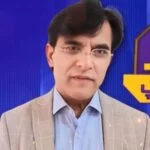
Khawaja Kabir Ahmed is a British/Belgian Kashmiri journalist who has been associated with the field of journalism since his educational days.
He holds a degree in journalism from the UK, is the Director News/Director Public Affairs and Anchorperson of the web TV channel Jammu Kashmir TV.
He writes on various topics in print journalism, focuses on the state of Jammu and Kashmir and is a promoter of fundamental human rights.
Latest News!
 Opinion11/18/2026Three and a Half Years of a People’s Movement, Questions Raised a Year Ago, and a People Paying the Price for Their Sacrifices
 Opinion11/10/2026From the War Balloons of 1849 to Armed Drones of 2026 — The Evolution of Military Technology, the Iran–Israel War, and a New Chapter of Drone Attacks Against Unarmed Civilians in the Pakistani-Administered State of Jammu and Kashmir
 Opinion11/07/2026From Rawalakot to the Entire State of Jammu and Kashmir — The Struggle for Public Rights, Geographical Unity and the Expanding Reach of the Movement!
- Opinion10/31/2026From the Assembly to the Ministries: Who Will Answer for the People’s Lives and Future?