The People’s Rights Movement, Overseas Kashmiris and Visits by Political Figures: A Serious Wake-Up Call!
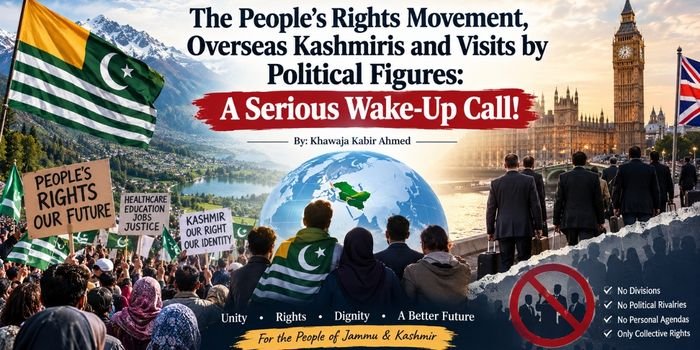
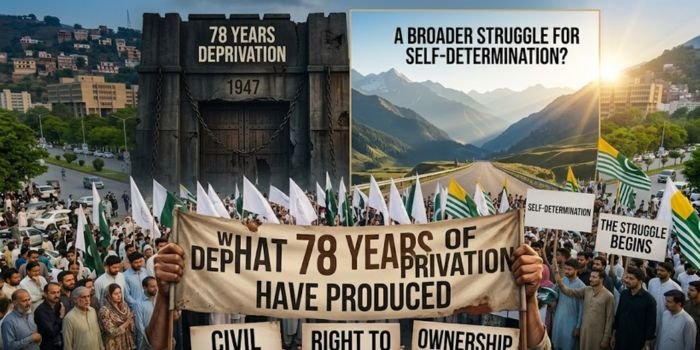
The People’s Rights Movement, which has been ongoing for the past three years in the Pakistan-administered State of Jammu Kashmir, is no longer limited to a few basic issues or demands. Rather, it has evolved into a broader struggle for public awareness, collective dignity, the future of coming generations, and the right to control their own resources and rights. The Jammu Kashmir Joint Awami Action Committee has become the collective identity of this movement, with a large number of Kashmiris living within the state and abroad feeling a deep emotional and ideological connection to it. For overseas Kashmiris, this movement is not merely a political activity; it is a struggle to protect their collective rights and the future of coming generations.
This commitment transcends political parties, communities, tribes and regions. Kashmiris around the world view the movement as a symbol of control over resources, political accountability and a dignified future. In their view, the struggle is not about bringing any individual or group to power, but about changing a system in which people are forced to protest to secure basic facilities while the privileges and comforts of the ruling elite continue to increase.
The lack of basic medical facilities remains a major concern in the Pakistan-administered State of Jammu Kashmir. Even essential vaccines required for treating snakebites are reportedly unavailable, while the need for MRI machines, CT scanners and other fundamental medical facilities remains unmet. The public has every right to ask why these necessities are not being prioritised in a system funded by their resources and taxes. Meanwhile, increases in the salaries, privileges and pensions of the ruling class have further intensified public discontent. When ordinary citizens struggle to access healthcare, education and employment, the widening gap between the ruling elite and the public becomes a fundamental question of political accountability.
According to supporters of the People’s Rights Movement, more than 150 human lives have been lost during different phases of this struggle, including more than 100 deaths described as martyrdoms during the latest phase, which has continued since 5 June 2026. These figures require independent verification. Nevertheless, the loss of human life, arrests, protests and questions surrounding the use of state force cannot be ignored. The continued presence of children, elderly people, women and young people protesting under the open sky for their fundamental rights reflects a situation that urgently requires a serious political solution. Public demands should be addressed through meaningful negotiations, transparency and the resolution of fundamental issues.
One of the defining features of the People’s Rights Movement is that it has connected public discontent within the state with the sentiments of Kashmiris living abroad while maintaining a commitment to peaceful struggle. Kashmiris in Britain, Europe and other parts of the world maintain deep connections with their relatives, ancestral regions and homeland. Through employment, manual labour and business, they support their families and contribute to their communities. For them, the ongoing struggle in the State of Jammu Kashmir is closely linked to their identity, family ties, collective dignity and the future of coming generations.
This strong connection makes overseas solidarity particularly important. Any attempt to weaken this unity or divide the overseas Kashmiri community could have serious consequences. Concern arises when former or current members of assemblies, ministers, advisers, bureaucrats and leaders of various political parties from the Pakistan-administered State of Jammu Kashmir travel abroad to organise or participate in gatherings based on political affiliation, region, tribe or community.
Questions are also being raised about governmental representation and the electoral process in the State of Jammu Kashmir. Critics argue that the existing political arrangements and the absence of elections in certain constituencies have generated serious debate about the government’s public legitimacy. Under these circumstances, it is natural for overseas Kashmiris to question political figures who continue their traditional political activities abroad without adequately addressing the concerns of people in their homeland. Political representation derives its legitimacy not from office alone, but from public trust, transparency and accountability.
Current and former political figures, ministers, advisers, members of assemblies and bureaucrats from the Pakistan-administered State of Jammu Kashmir should therefore carefully reconsider organising or participating in political events in Britain that risk creating divisions within the overseas Kashmiri community along party, regional, tribal or community lines. When people in their homeland are engaged in a prolonged and sensitive struggle for fundamental rights, activities abroad that undermine their collective solidarity can make an already difficult situation more complicated. Such activities are neither necessarily beneficial to the individuals concerned nor consistent with the collective interests of Kashmiris at home and abroad.
Overseas Kashmiris have established their identity and a recognised standing at the international level through years of hard work, sacrifice and perseverance. Preserving this identity, standard and collective dignity is a shared responsibility. It should not be sacrificed for political interests, party affiliations or personal publicity. Kashmiris living abroad are not merely representatives of a political party, family, tribe or region; they are part of a much broader community connected to the State of Jammu Kashmir. Encouraging divisions or organising events that risk increasing tensions could damage the collective dignity and social cohesion that have taken years to establish.
This concern is not directed against the personal travel, private meetings or legally protected right to freedom of expression of political figures, bureaucrats or any individual. Rather, it is a call for greater awareness of the sensitivity of the present circumstances and a stronger sense of collective responsibility. Political figures should assess the potential social and political consequences of their activities. In particular, they should avoid turning the Kashmiri community in Britain into an arena for political competition and instead contribute constructively to the promotion of public rights, human dignity, the resolution of fundamental issues and peaceful dialogue.
An important question also arises as to whether certain political activities genuinely serve the needs of the community or are primarily intended to secure personal publicity, political influence or financial support. Kashmiris living in Britain have established their lives, businesses, employment and family relationships there. Political figures arriving from their homeland eventually return, but local residents may have to bear the long-term consequences if their activities create divisions, tensions or mutual distrust. Political figures and event organisers should therefore consider the broader impact of their activities and avoid events that could deepen divisions or provoke public unrest.
Kashmiris living in Britain have the legal right to peaceful protest, assembly and freedom of expression. If members of the community disagree with a political event, they may also express their opposition through peaceful protest within the framework of the law. Organising a political event is a right, but that right comes with social responsibility. Organisers must consider whether their activities could create tensions or raise public order concerns and should act accordingly.
This is not the time to place personal egos, party loyalties or family and tribal ties above the collective struggle for public rights. The priorities of overseas Kashmiris should be supporting affected families, defending fundamental rights, advocating better medical facilities, demanding political accountability and promoting a peaceful resolution. Where an activity risks creating divisions or tensions within the community, reconsidering it or refraining from it would be the more responsible course of action.
The People’s Rights Movement must be understood not only in the context of ongoing protests within the state, but also in terms of the solidarity, collective trust and social unity of Kashmiris living abroad. The concerns of those associated with this movement should not be dismissed as insignificant or reduced to mere political disagreements. They reflect broader questions about fundamental rights, public accountability and the future of the Kashmiri people.
The central question remains that when people in the Pakistan-administered State of Jammu Kashmir are protesting for fundamental rights, healthcare, education, control over their resources and political accountability, should the collective energy of Kashmiris living abroad be allowed to be consumed by internal divisions, or should it be channelled towards the peaceful resolution of public issues?
The need of the hour is for political figures, former and current government officials, and bureaucrats arriving from the Pakistan-administered State of Jammu Kashmir, particularly in Britain, to refrain from organising or participating in political events that risk dividing the community. They should preserve, rather than undermine, the identity, standing and collective dignity that overseas Kashmiris have established internationally. Such an approach is essential not only for the unity of the overseas Kashmiri community, but also for the collective interests of the people living in their homeland and the peaceful future of the People’s Rights Movement.
About Author

-
Khawaja Kabir Ahmed is a British/Belgian Kashmiri journalist who has been associated with the field of journalism since his educational days.
He holds a degree in journalism from the UK, is the Director News/Director Public Affairs and Anchorperson of the web TV channel Jammu Kashmir TV.
He writes on various topics in print journalism, focuses on the state of Jammu and Kashmir and is a promoter of fundamental human rights.
Latest News!
 Opinion10/23/2026The People’s Rights Movement, Overseas Kashmiris and Visits by Political Figures: A Serious Wake-Up Call!
 Opinion10/21/2026From Hereditary Power to a Crisis of Leadership: The Historic Responsibility Now Rests on the Shoulders of the Younger Generation!
 Opinion10/15/2026Can Any Uniform Grant a Licence to Kill? Can It Erase the Stain of Blood?
 Opinion09/21/2026Yasin Malik’s Case: A New Legal Turn and a Question for the Global Conscience