Growing Public Mobilisation in Pakistan-administered Jammu Kashmir Amid Demands for Implementation of Agreements
Written by: Khawaja Kabir Ahmed
The ongoing public rights movement in Pakistan-administered Jammu Kashmir has once again entered a critical and sensitive phase. This movement, being carried out under the platform of the Jammu Kashmir Joint Awami Action Committee, has long been oscillating between public demands, protests, and negotiations, and is now once again taking the shape of a major public march and wave of demonstrations.
A complete shutter-down and wheel-jam strike has been announced across the region from 9 June for an indefinite period.
On the same day, a large protest march will begin from Bhimber and Mirpur, which will pass through Kotli and reach Rawalakot. Participants from all towns and cities along the route will continue joining the march, and by 10 June this massive gathering will move from Rawalakot towards Muzaffarabad, where protesters from the Muzaffarabad division will also join.
A peaceful sit-in and encirclement of the assembly will be held there, which will continue until practical progress is made on the Charter of Demands.
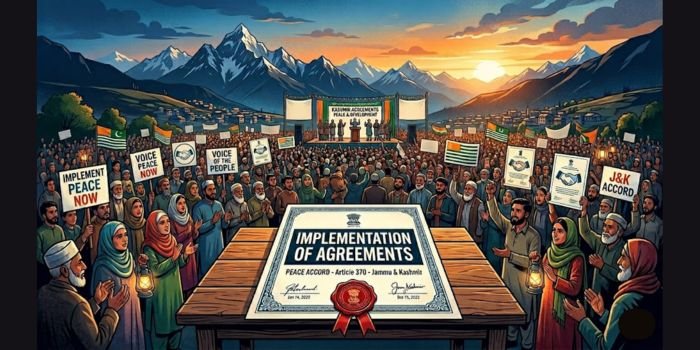
Circles associated with the movement argue that all their demands have already been accepted as legitimate, and that the government and state institutions have also made commitments to implement them. The central issue now, they maintain, is the implementation of those promises in order to prevent the deepening of a crisis of trust.
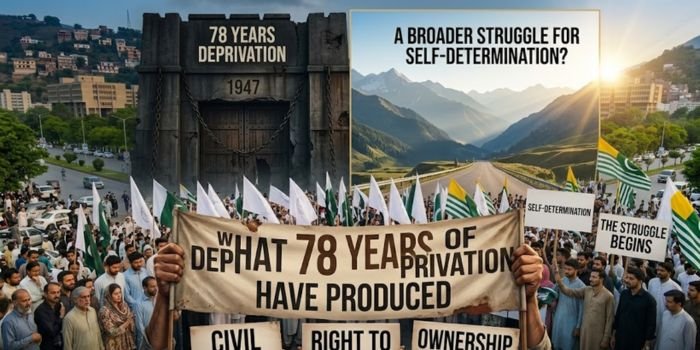
The Charter of Demands includes key points such as the abolition of refugee seats, the end of elite privileges, and the recognition of local ownership and control over resources. The movement asserts that genuine governance should belong to the people, and that the people of the region should have direct authority and control over their resources.
It is also being stated that in previous protest movements, incidents of severe mistrust and violence occurred, resulting in the loss of precious human lives. In this context, concerns are being raised that if a harsh administrative approach is adopted this time, the situation could further deteriorate, while at the same time a significantly higher level of public participation is expected.
On the other hand, it is also being argued that this time public participation may be several times greater than before, primarily due to the government’s prolonged failure to implement its commitments and to meet public expectations. This has generated widespread public pressure and collective unrest.
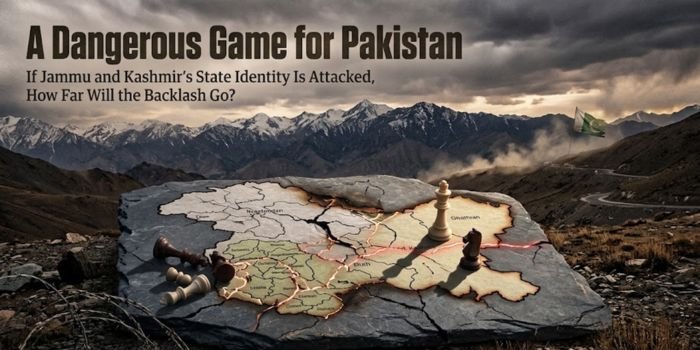
This movement is no longer limited to internal administrative matters alone; it is also influencing the broader political narrative of the region. It is increasingly being argued that it is essential for Pakistan to set an example of good governance and protection of public rights in the areas under its administration, which could also strengthen its international position regarding Jammu & Kashmir.
Some circles within the movement also maintain that relations between the state and the people should be based not on force but on mutual consent, agreements, and public participation. Only through this can a sustainable, peaceful, and trustworthy political structure be established.
Overall, the situation has reached a stage where the real question is no longer the validation of promises, but their implementation. If state institutions and the government take immediate and practical steps on already acknowledged demands, not only can potential unrest be avoided, but trust can also be restored. Otherwise, the crisis may deepen further.
About Author

-
Khawaja Kabir Ahmed is a British/Belgian Kashmiri journalist who has been associated with the field of journalism since his educational days.
He holds a degree in journalism from the UK, is the Director News/Director Public Affairs and Anchorperson of the web TV channel Jammu Kashmir TV.
He writes on various topics in print journalism, focuses on the state of Jammu and Kashmir and is a promoter of fundamental human rights.
Latest News!
 Opinion09/21/2026Yasin Malik’s Case: A New Legal Turn and a Question for the Global Conscience
 Opinion09/15/2026After Balochistan, Pakistan-Administered Jammu Kashmir?
- Opinion09/14/2026Sanctions on Israel: A Major and Positive Step —But Why Not the Same for India and Pakistan?
 Opinion08/20/2026Changing U.S. Policy on Jammu and Kashmir And the Kashmiri People Caught Between Two Nuclear Powers