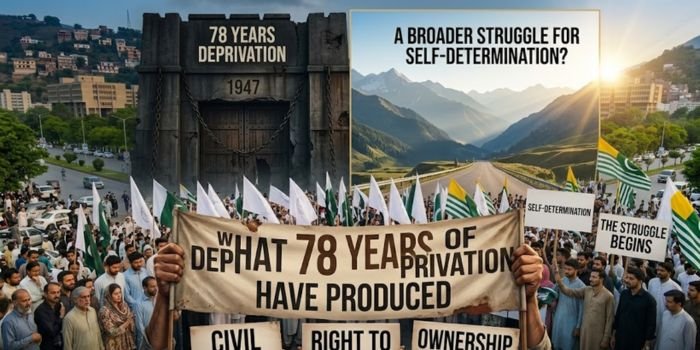
Keran’s Last Farewell
By Waheeda Jammu Kashmiri
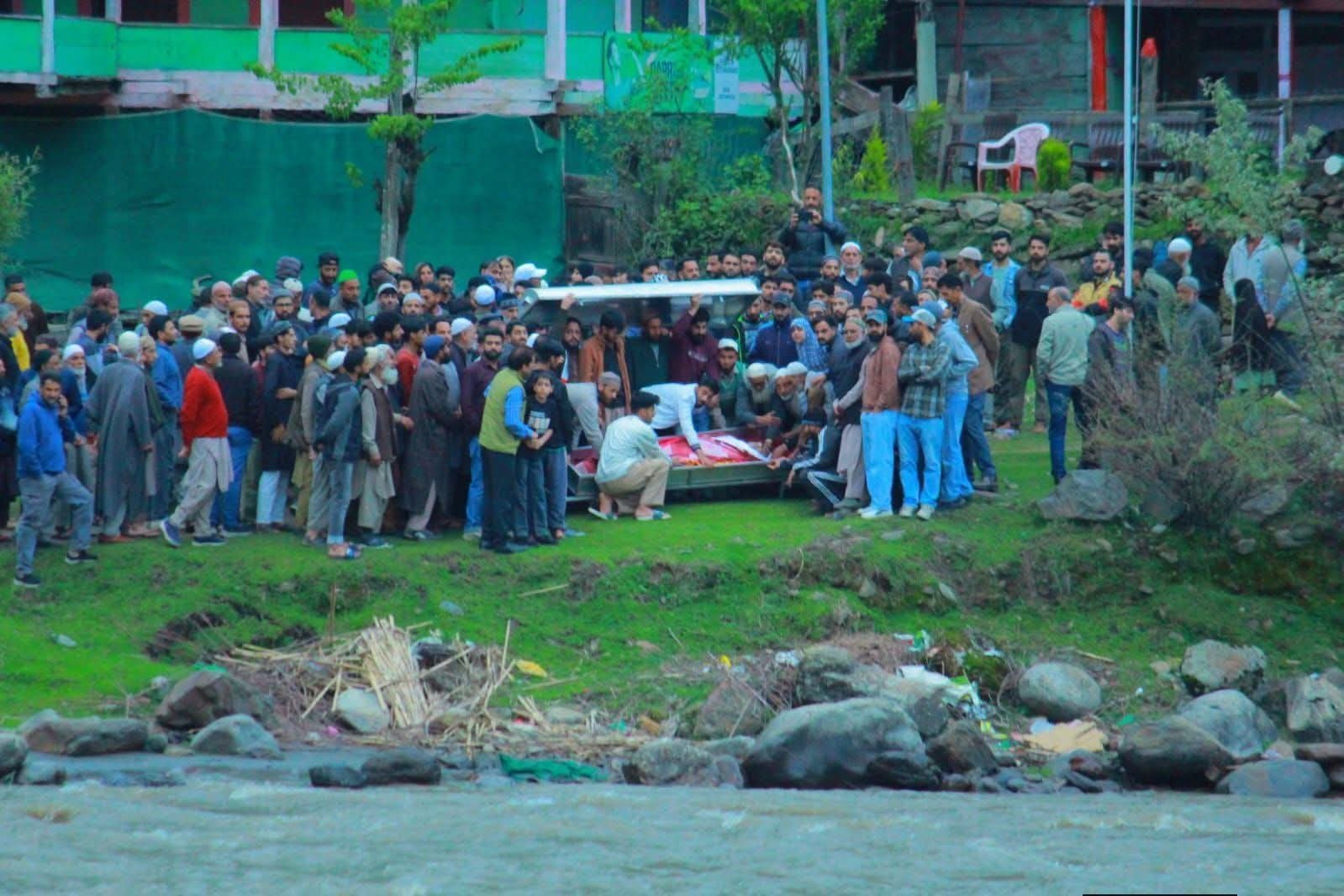
The viral funeral from Keran has done what speeches, slogans, and diplomatic statements have failed to do for decades: it has shown the world the raw human cost of Kashmir’s division. On one side of the River Neelum, a man’s body was laid to rest in Indian-administered Kashmir; on the other side, his sister and family stood helplessly in Pakistan-administered Kashmir, watching from a distance they could not cross.
For Kashmiris, this was not just a tragic scene. It was a reminder that our pain is not accidental, not temporary, and not old enough to be ignored. It is a wound that has been reopened again and again since 1947, and Keran simply made it visible for a few brutal minutes.
1947 Was the First Betrayal
As a Kashmiri, I cannot accept the sanitized language that hides the truth of 1947. Pakistan attacked our land on 22 October 1947, and what followed was not a heroic rescue but a violent invasion that shattered our homes, our security, and our families. The arrival of the Pakistani side, including elements of the Pakistan Army and armed men moving under its shadow, brought looting, fear, and bloodshed to Kashmiri towns and villages.
Many families still carry stories passed down in whispers: houses plundered, women violated, children scattered, and villages destroyed. In parts of the Valley and beyond, Kashmiri women and daughters jumped from bridges and into rivers to save themselves from the horror of capture and abuse. Those memories are not propaganda; they are part of Kashmiri family history.
India’s Entry and the Split
Then came 27 October 1947, when Indian troops entered Kashmir after Maharaja Hari Singh signed the Instrument of Accession. That moment turned Kashmir into a military and political battlefield between two newly born states, both of which began speaking in the language of possession.
This is the part people outside Kashmir often miss: Kashmir was not given peace by either side. It was divided by force, claimed by force, and then managed by force. The ordinary Kashmiri was left to live with the consequences — separation, surveillance, displacement, and the slow disappearance of trust.
The River Became a Border
Keran is one of the places where this division feels especially cruel. The River Neelum physically separates communities that were once one social and emotional space, and in the past families could sometimes exchange letters and gifts across the river at this very spot. That simple detail matters, because it shows that before politics hardened the frontier, human connection still found ways to survive.
Today, even death cannot fully reunite us. A funeral on one side becomes a spectacle of helplessness on the other, and the river that should have been a shared landscape becomes a border of tears. The image of a sister watching her brother’s last rites from across the water is the kind of scene that should shame every government that claims to care about Kashmir.
The Agreements That Locked Us In
The Shimla Agreement of 1972 turned the ceasefire line into the Line of Control and formalized a division that Kashmiris had never consented to in the first place. It was presented as diplomacy, but on the ground it meant the freezing of a partition that had already caused unimaginable pain.
Many Kashmiris believe Pakistan made a deal with India on Kashmir, and local voices, including Hamid Mir, have claimed that this understanding helped create the conditions in which India later revoked Article 370 and altered Jammu and Kashmir’s special status on 5 August 2019. For Kashmiris, this only deepened the sense that both states were negotiating over our future while we were left unheard.
Kashmiris Speak Back
Local Kashmiri voices have responded with anger because they understand what this video means. Wasi Khawaja from Neelum Valley wrote that both states are occupiers and oppressors, and described the Keran scene as the face of the suffering imposed on Kashmiris for 79 years. His words are blunt, but they are honest.
He also rejected the labels that India and Pakistan have used to define Kashmiris, insisting that Kashmiris are neither someone’s “jugular vein” nor someone’s “integral part” to be claimed at will. That sentence captures a deep and painful truth: we are tired of being reduced to slogans by two countries that have both failed us.
Why This Video Hurt So Much
This video hurt because it forced the world to see Kashmir as a family tragedy, not just a border dispute. A brother’s funeral should never be separated by a river, and a sister should never be left to mourn with her hands empty and her heart breaking across enemy lines. That is what division does: it turns ordinary human rituals into political humiliation.
The grief in Keran is also a reminder that Kashmiris have been forced to live between two powers that speak in the language of rights while practicing control. One side claims to defend Kashmir; the other side claims to integrate it; both sides keep Kashmiris from living with dignity.
What I Want to Say Clearly
I want to say this plainly: from a Kashmiri perspective, Pakistan’s 1947 attack was the first major blow that tore open our homeland, and India’s arrival, followed by decades of militarization, hardened that wound into a permanent division. Both states have written their own stories, but Kashmiris have lived the cost.
Keran is not just a viral clip. It is a confession of history. It shows that when a land is divided without justice, even a funeral becomes a border incident, and even a sister’s tears are forced to stop at the riverbank. Until Kashmiris are allowed to decide their own future, the Neelum will keep reflecting not beauty, but betrayal.
About Author

-
I am a Computer Science student originally from Mirpur, in Pakistan-administered Kashmir, and currently based in London. Alongside my academic pursuits, I am deeply committed to writing, with a particular focus on local and political issues affecting my homeland. As a contributor to KiNewsHD, I strive to amplify underrepresented perspectives and foster greater awareness through thoughtful, informed commentary.
I am a co-founder of JFJK and previously served as President of its UK zone, where I advocated for the rights and voices of the Kashmiri people, including the aspiration for an independent Jammu and Kashmir. In addition to my advocacy work, I am the founder of K2 Creative Agency, reflecting my interest in creative expression and digital engagement.
As a feminist, I am guided by a strong belief in equality and social justice. I use my platform to engage with issues that matter, drawing inspiration from Shaheed Maqbool Butt, whose legacy continues to shape my perspectives and commitment to activism.
Latest News!
 News06/24/2026The Blood of Our Martyrs Cries Out: Pakistan’s Brutal Crackdown on JAAC Protests in Azad Kashmir
 News05/29/2026AJK Identity Under Threat
 News05/22/2026Hamza Burhan Killed in Muzaffarabad: Kashmiris Trapped Between Indian Propaganda and Pakistani Hypocrisy
 Blog05/20/2026Troop Withdrawal in Jammu and Kashmir: Debate and Justification