Iran–Israel–United States War and the Impact of the Closure of the Strait of Hormuz
By Khawaja Kabir Ahmed
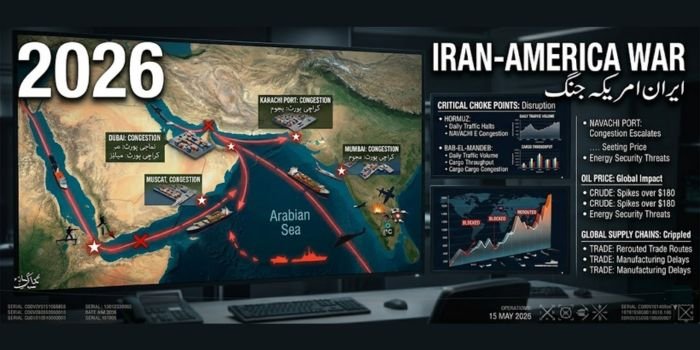
The ongoing tensions in the Middle East have now entered a phase where a war of words is rapidly transforming into concrete actions. Amid escalating confrontation between Iran, Israel, and the United States, various reports suggest that Iran has announced the closure of the Strait of Hormuz and has warned maritime vessels against passing through this strategic waterway. If this step is implemented fully and effectively, its consequences will not be confined to military dimensions alone but will directly affect the global economy and political stability.
The Strait of Hormuz is not merely a narrow sea passage; it is the central artery of global energy transportation. A significant portion of crude oil and liquefied natural gas exported from the Persian Gulf passes through this route to reach international markets. Any closure or serious disruption in this corridor immediately generates fear and uncertainty in global markets. Oil prices surge sharply, stock markets trend downward, and insurance and shipping costs escalate. Import-dependent economies in Europe and Asia come under immediate pressure, while developing countries may face a new wave of inflation. Rising fuel prices do not remain limited to filling stations; they cascade into transportation, industry, agriculture, and food prices. In this way, a regional action can potentially trigger a global economic crisis.
From a military perspective, the Strait of Hormuz is recognized as an international waterway, and major naval powers consider keeping it open a strategic priority. If Iran’s announcement of closure materializes in practical terms, the likelihood of intervention by U.S. and allied naval forces would increase significantly. Such intervention could escalate into a broader regional war. Gulf states would heighten their defensive preparedness, and the entire region could descend into prolonged uncertainty. At the same time, Iran itself would not remain immune from economic pressure, as its own exports and financial interests are tied to this same maritime route. Additional sanctions or diplomatic isolation could further intensify its internal economic challenges.
Under international law, the right of “transit passage” through this strait is recognized, making a complete and prolonged closure difficult to sustain in practical terms. More likely scenarios may involve limited disruptions, stricter naval monitoring, or the creation of a climate of risk and uncertainty—each of which alone is sufficient to cause severe turbulence in global markets. However, in an already volatile wartime environment, even a minor incident carries the risk of escalating into a major confrontation, posing a profound challenge for global diplomacy.
History teaches that whether through the closure of sea lanes or the application of economic pressure, temporary political gains may be achieved, but they rarely provide a lasting and sustainable solution. If energy politics and power rivalries turn into open conflict, the damage will not remain confined to the directly involved parties; the entire world will bear the cost. At this critical juncture, it is imperative that all influential powers capable of playing a constructive role prioritize restraint and diplomatic engagement over provocation. Military operations must be halted immediately, and actions that threaten global stability should be avoided. In the broader interest of the region and the world, wisdom demands the reduction of tensions and the pursuit of an immediate, unconditional, and comprehensive ceasefire to safeguard human lives, the global economy, and future generations from further devastation.
About Author

Latest News!
 Opinion03/01/2026Iran–Israel–United States War and the Impact of the Closure of the Strait of Hormuz
 Opinion01/13/2026From Protest to Promise: Azad Kashmir Rose United—And Together, We Will Win Our Dignity Back.
 News10/31/2025Restoration of Student Unions! An Inevitable Need for Future Leadership
 Blog10/30/2025Public Awareness and the Tug of Power