
Heaven, Hurdles, and Hope: Resilient Life of Neelum Valley
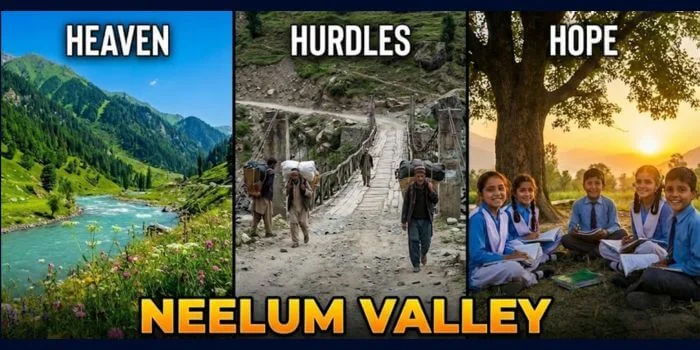
Neelum Valley, a heaven on earth, is located in Neelum District, Azad Kashmir, Pakistan. It is the region’s northernmost district and is widely considered one of the most beautiful tourist destinations in the country. In Neelum Valley, life moves to the rhythm of the rushing river and the shifting shadows of the Himalayas. It is a life defined by rugged beauty, deep-rooted traditions, and a constant dialogue with nature.
Most people wake up early in the morning and pray to Allah almighty. The moments after Namaz (prayer) are not just a spiritual conclusion but also a vital part of the region’s social and communal fabric. According to official data from the AJK government and recent census reports, the population is nearly entirely Muslim. Because the valley is almost entirely Muslim, the lifestyle is deeply rooted in tradition.
After Fajr, Neelum Valley wakes to a purposeful hustle. Most men depart for their Zimidari (responsibilities) in the fields, agriculture and livestock are the lifeblood here, and they spend mornings tending terraced crops or moving cattle to greener pastures. Meanwhile, shop owners and government employees in towns like Athmuqam and Sharda begin their commutes along winding riverside roads.
The Students: Education is highly valued. Because schools are far away, students set off early, wearing uniforms as they navigate steep mountain paths and bridges to reach their schools and colleges—often carrying their families’ hopes with them.
The Women: As the managers of the home, women continue their essential household chores. Beyond cooking and cleaning, their mornings often involve managing the “Bukhari” (stove), caring for children, and sometimes assisting with the livestock near the house, ensuring the family’s domestic engine keeps running smoothly.
Meanwhile, elders, having fulfilled their early morning duties, often stay back to oversee the household, offer guidance to the youth, or gather in small groups to discuss village matters and the day’s weather.
As the sun dips behind the mountains, the valley falls into a cool shadow, marking the evening a time for family and conversation.
During this time, shepherd’s whistles can be heard as goats and sheep are led back to their shelters. Women finish their chores milking the cows and preparing the evening fire.
With night approaching, the evening meal is usually simple but hearty. It might be Daal Chawal, a vegetable curry made from local wild greens, or on special occasions, traditional Kashmiri Wazwan dishes like Rogan Josh or Gushtaba.
In Neelum, the “community” is family. Neighbors often drop by to sit around the fireplace. They share stories, recite Sufi poetry, or listen to elders talk about the valley’s history.
As darkness deepens, electricity can be sparse, and the mountain air is biting, so most people retire early. By 9:00 PM, the valley is usually silent, with only the constant, rhythmic thunder of the Neelum River keeping watch through the night.
The people of Neelum Valley are incredibly warm, honest, and humble. Even though their lives are physically tough, they treat every guest like a blessing. If you visit, they will likely invite you into their homes for a cup of Noon Chai (salted tea) and offer you whatever food they have, even if they are not wealthy.
They are very helpful and selfless. If a traveler gets stuck in the snow or mud, the locals will gather to help without expecting anything in return. While they are traditional and deeply respect their elders, their hearts are open, making every visitor feel like family.
Life in Neelum Valley is undeniably beautiful, but it is also defined by a level of physical and mental toughness that is rare in urban settings. The breathtaking views come with the price of extreme isolation and a constant struggle against the elements.
When April arrives, Neelum Valley begins to stir from its deep, icy slumber like a blue gem slowly catching the light. The melting snows of the high peaks cascade down to feed the river, which sings with a newfound vigor. The landscape is suddenly painted in a delicate, vibrant green, accented by the ethereal white and pink of cherry, apricot, and apple blossoms.
For locals, spring is a time of resurrection. People emerge from winter confinement to mend stone walls and revive the terraced fields. The crisp morning air, carrying the scent of damp earth and woodsmoke, mingles with the quiet excitement of families sipping Noon Chai. Students find joy in the renewed trek to school, as the icy winter paths yield to safe mountain trails.
As the sun climbs higher from June to August, the valley transforms into a lush, emerald kingdom where every hand is busy and every heart is full. This is the season of the great Dhoke migration, a timeless tradition where families lead their livestock to the high-altitude pastures. Living in temporary stone huts amidst the clouds, they churn fresh butter and cheese while their cattle graze on wild, medicinal herbs.
Below in the village, the fields of Rajma and corn demand side-by-side labor from both men and women, a testament to their shared resilience. It is a time of immense physical toil, yet the air is celebratory, filled with the laughter of summer weddings and the rare, blue beauty of alpine lakes like Ratti Gali, finally accessible to those brave enough to seek them.
With the arrival of September, the valley undergoes a dramatic, fiery transformation into a “Golden Wonderland.” The massive Chinar and walnut trees shed their green for robes of burning orange, deep red, and shimmering gold. But beneath this breathtaking beauty lies the heavy weight of Zimidari, the sacred responsibility of preparation.
The days are spent in a race against time, harvesting walnuts, gathering wild honey, and drying vegetables for storage through the months ahead. In the bustling bazaars of Athmuqam, the atmosphere is thick with urgency as families stock up on heavy woollens and blankets. It is a season of stacking wood and securing grain, a quiet, industrious prelude to the coming cold.
Then comes December, and with it, the “White Silence.” A heavy blanket of snow, often six feet deep, descends upon the valley, turning places like Kel and Taobat into isolated fortresses of frost. Life retreats indoors, centering entirely around the glowing Bukhari stove that burns day and night. The morning ritual is one of survival; men climb onto their wooden roofs to shovel away the crushing weight of the snow, while the livestock is kept warm on the ground floor below the living quarters.
The diet turns rich and heavy, with bowls of savory Harissa and endless cups of salted tea to fortify the blood against the freezing winds. In this frozen world, the Neelum River flows dark and defiant against the white peaks, a reminder that even in the stillness of winter, the valley’s spirit remains unquenchable.
To live in Neelum Valley is to exist at the mercy of the very mountains that provide such breathtaking beauty. The valley’s singular road is more than just a path; it is a fragile lifeline that the earth often tries to reclaim. During the weeping rains of the monsoon or the shifting thaws of spring, the mountainside can surrender without warning, sending landslides crashing down to sever the connection to the outside world.
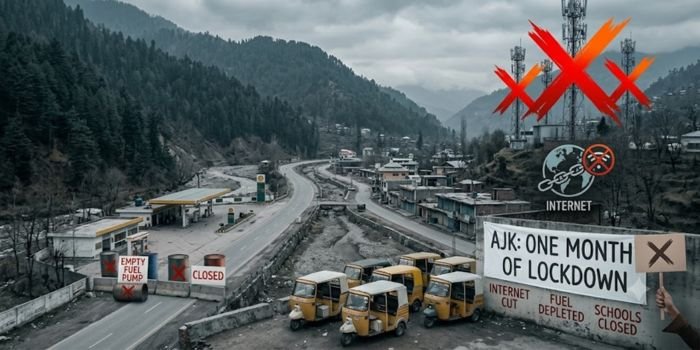
In these moments, entire villages become islands of silence, cut off from food, medicine, and hope. This isolation is deepened by a digital void: the rest of the world is connected by invisible threads of data, while the upper reaches of Neelum remain in a technological shadow. For the student reaching for knowledge or the businessman seeking a market, the lack of a consistent signal is a barrier as steep as any peak.
There is a unique, heavy silence that hangs over villages like Keran and Bugna, where the crystal waters of the Neelum River serve as the only divider between two worlds. Living on the Line of Control (LoC) means living with a heart that is never fully at ease. Even when the guns are silent, the ghost of uncertainty lingers in the air.
At any moment, the rhythm of a peaceful afternoon can be shattered, forcing families to abandon their ancestral hearths and cherished livestock for the cold safety of underground bunkers. This constant threat of displacement is a wound that never quite heals, disrupting the innocence of childhood and the continuity of education, turning life into a series of temporary pauses.
When the first heavy snows fall, the upper valley enters a state of voluntary siege. In places like Taobat, the world vanishes under eight feet of white powder, locking the community in a four-month embrace of ice. Survival here is an art form perfected in autumn; if a family fails to stockpile enough grain, dried Hanz (vegetables), or firewood during the harvest, the winter becomes a merciless foe.
Daily life becomes a battle of physical endurance as men scale their own roofs to shovel away the crushing weight of the snow, knowing that to rest is to risk a collapse. In this frozen stillness, a medical emergency becomes a desperate race against time; when the roads are buried, the only ambulance is a wooden stretcher carried by weary neighbors across miles of treacherous, waist-deep drifts.
The hurdles of Neelum Valley are etched into the very soles of its children’s feet. For a young student, the path to a brighter future is a ten-kilometer trek over jagged trails and steep inclines, a journey made even harder by the scarcity of teachers who can brave these remote heights. This physical distance mirrors the valley’s economic struggle.
With an economy tied to the whims of the weather and a tourism season that lasts only as long as the summer sun, many families live on the edge of subsistence. A single blight on the corn or a disease among the goats can plunge a household into poverty. Yet, despite these rugged trials, the landslides, the cold, and the isolation, the spirit of the Neelum people remains like the river itself, cold, clear, and unstopping.
To overcome the formidable hurdles faced by the people of Neelum Valley, a multi-pronged approach focusing on infrastructure, technology, and local empowerment is essential. First and foremost, the government must invest in all-weather road infrastructure, including the construction of tunnels at landslide-prone points and bridges that remain accessible during heavy snowfall to ensure the valley is never cut off.
Expanding digital connectivity by installing more towers and providing satellite internet would bridge the educational and economic gap, allowing students to access online resources and enabling local entrepreneurs to market their tourism and agricultural products globally.
To address the healthcare crisis, establishing fully equipped mini-hospitals in remote hubs like Sharda and Kel, along with a dedicated air ambulance or 4×4 emergency service for winter, would save countless lives. Furthermore, promoting sustainable eco-tourism beyond the summer months and establishing small-scale food processing units for local products such as walnuts and Rajma would provide year-round income, reducing reliance on subsistence farming.
These are some general solutions for a basic life in Neelum Valley. Providing interest-free loans and vocational training to youth would empower the local community to build a resilient economy that withstands both the harsh climate and the mountainous region’s geographical isolation.
Neelum Valley is more than just a point on a map or a place with impressive scenery, it represents resilience and community spirit. As the moon rises and its light reflects on the Neelum River, it becomes clear that “heaven on earth” is not only about the forests and snow.
It is present in sharing a cup of Noon Chai, in a neighbor’s support, and in the quiet prayers carried by the mountain air. Neelum shows that, despite cold winters, the heart stays warm, and hope persists even in the face of mountains. Visiting Neelum showcases nature’s grandeur, and meeting its people reveals their kindness.
About Author

- Muhammad Saif is an experienced SEO content and news writer with 4 years of expertise in creating engaging, optimized content. Skilled in keyword research, SEO strategy, and crafting timely news articles, Muhammad Saif helps brands boost visibility and connect with audiences. Known for simplifying complex topics, Muhammad Saif delivers impactful content that informs and inspires.









One Comment