From Protest to Promise: Azad Kashmir Rose United—And Together, We Will Win Our Dignity Back.
By Sardar Aftab Khan
13 January 2026
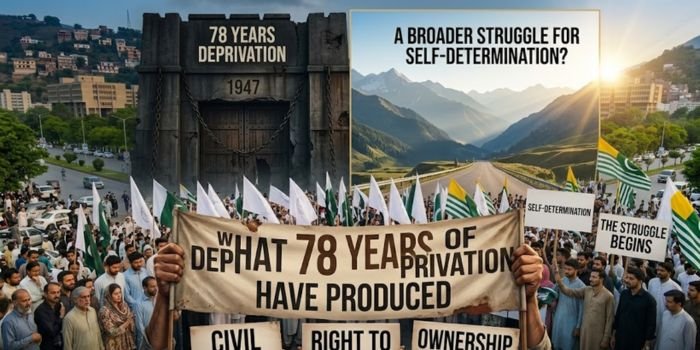
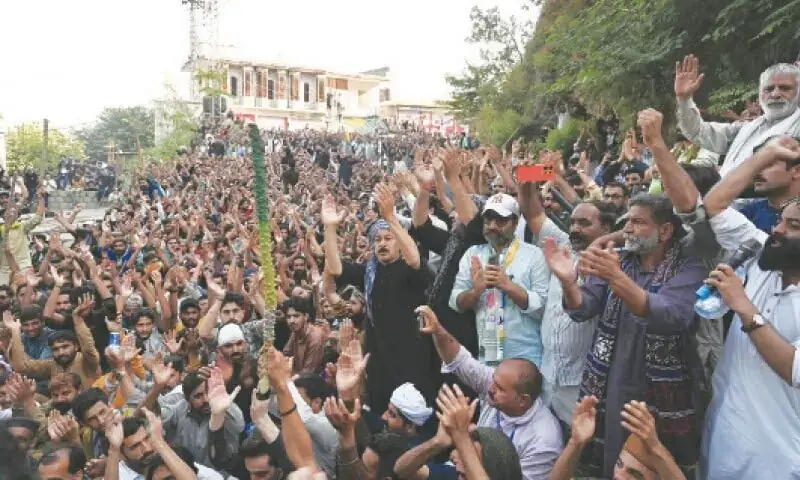
In early October 2025, the streets of Azad Jammu & Kashmir spoke with one voice. Ordinary people, workers, students, traders, mothers, and elders stood peacefully and firmly for dignity, justice, and basic rights. Their resolve led to a historic moment: the Muzaffarabad Agreement, signed by the Government of Pakistan, the Government of Azad Jammu & Kashmir, and the Jammu & Kashmir Joint Awami Action Committee (JKJAAC).
That agreement was not a favour. It was a promise of justice, relief, reforms, and better services. A special committee was formed to ensure those promises would be delivered. Today, months later, the people are asking a simple question: Where do we stand?
The answer is mixed—and that is precisely why this moment matters.
Some steps have been taken. Some promises are moving. But too many commitments remain delayed, unresolved, or wrapped in silence. In many cases, proof has not been shared publicly. The people deserve clarity. This is not about blame; it is about trust.
Justice delayed is justice denied.
The government says most FIRs have been withdrawn. Yet some—especially those linked to deaths—remain pending. Many citizens report lingering harm: character certificates affected, travel blocked, names quietly placed on restriction lists without notice or explanation. This is not the justice promised. The people want all FIRs withdrawn fully, and no one punished quietly or unfairly.
The agreement also promised independent judicial investigations into deaths and incidents. Authorities say they have contacted the High Court. But no commission has officially begun, and no timeline has been announced. The people want what was promised: clear notifications, judges appointed, and a public schedule.
Relief must be visible, not whispered.
Compensation and jobs for affected families are reported as delivered. Families confirm some progress. But official lists and documents have not been shared publicly. Transparency is not optional; it is essential. Names, payments, and job orders should be clearly recorded and accessible.
Equitable Reform of Refugee Seats in the AJK Legislative Assembly is still awaited
The Jammu and Kashmir Joint Awami Action Committee (JKJAAC) has recently renewed calls for abolishing the twelve Assembly seats reserved for refugees of Jammu & Kashmir and Mangla Dam affectees residing in Pakistan. This demand arises from genuine public frustration with political manipulation, electoral distortion, and governance instability. However, outright abolition is a politically reactive response that risks serious constitutional and democratic side-effects. It may inadvertently weaken Azad Jammu & Kashmir’s representative framework and erode the collective Kashmiri political identity. These concerns are legitimate. Refugee representation is constitutionally entrenched under Article 22 of the AJK Interim Constitution, 1974. An
Equitable Reform of Refugee Seats in the AJK Legislative Assembly must be a shared agenda for restoring people’s sovereignty and equitable participation in governance at all levels.
Health cannot wait.
Health Cards were promised within 30 days. Committees have met. Discussions have happened. Yet, Health Cards are still not in use, and people cannot register. The people want care, not meetings about care. Planning approvals for MRI and CT scanners exist, but machines are not yet installed. Hospitals need dates, not assurances.
Electricity and essentials demand honesty.
A Rs. 10 billion electricity improvement fund was announced. Plans and paperwork exist. But the public still does not know when money will be released or where it will be spent. Mangla-affected families were promised bill waivers; announcements were made, but people are unsure whether billing systems have truly changed. Bills must stop in practice, not just on paper.
Reforms must be real.
Yes, the cabinet has been reduced to 20 ministers. But the spirit of reform is weakened when unelected political assistants and advisers are appointed at high salaries. Nepotism erodes credibility. Anti-corruption laws are being prepared, yet no final timeline is shared. The people want clear dates and real enforcement.
Education must be fair.
New education boards in Muzaffarabad and Poonch remain non-existent. Open merit has been implemented, but outcomes are unequal: few AJK resident students are securing admissions compared to non-territorial students. Merit must be fair in impact, not just in name. Student unions, still a distant dream, await clear rules and genuine participation.
Land and dignity go together.
Mangla Dam–affected families still await land ownership papers. Mendor Colony refugees were promised immediate property rights; policies are still being prepared. Legal ownership should not be postponed indefinitely.
Infrastructure promises must be honoured.
Feasibility studies are ongoing for roads and airports, but timelines remain unclear. On Neelum Valley tunnels, the narrative has shifted—from study to dismissal—without the transparent evaluation promised in the agreement.
Even bread matters.
The agreement promised a 70% local and 30% imported wheat mix to ensure quality and affordability. The approved 50/50 mix departs from that promise. If changes are necessary, the people deserve a clear explanation.
So what needs urgent attention now?
- Complete FIR withdrawals, end ECL and ECL/PCL listings without notice or due process, stop off-loading and arrests of AJK residents at airports, and ensure fair treatment of citizens
- Start judicial commissions with clear timelines
- Launch Health Cards for the public
- Share electricity funding plans openly
- Grant land ownership to affected families
- Be transparent about assembly seat reforms
- Follow the agreed wheat supply ratio—or explain why not
This is not about politics. It is about trust.
The people came out peacefully. They suffered losses. They were promised relief and reform. They deserve honesty, clarity, and delivery—not silence or confusion.
And here is the hope: the people are not alone.
The Jammu & Kashmir Joint Awami Action Committee exists to empower voices, to represent the people effectively, and to hold the process to account—calmly, lawfully, and firmly. Progress has come where unity has held. More will come if unity remains unbroken.
History shows that when the people of Azad Jammu & Kashmir stand together—patient, principled, and firm—promises turn into realities. Under the umbrella of JKJAAC, the public voice is stronger, clearer, and impossible to ignore.
Stay united. Stay firm. Stay hopeful.
The promise made in Muzaffarabad can still be fulfilled—if we insist on it, together.
Sardar Aftab Khan is a public servant, policymaker, researcher and strategist for democratic reforms in Azad Jammu Kashmir. Over a 35-year career, he has championed recognition of Kashmiri national identity, people’s rights, decentralised governance, and political inclusion. He can be reached at: aftab@kdfuk.org . Dated: 13 January 2026
About Author

Latest News!
 News10/18/2026Jammu Kashmir Liberation League Opposes Military Intervention in Political Dispute
 Opinion10/17/2026Pakistan’s $100 Billion Export Dream: The Missing Link Is Policy Delivery
 News07/31/2026Kashmir Solidarity Gathering: Mushtaq Ahmad Khan Leads Peace Rally at Islamabad’s F-10 Markaz
 News07/29/2026Stand for Azad Kashmir: Islami Jamiat-e-Talaba Stages Massive Protest Outside Islamabad Press Club